

Producer Price Inflation
April 2025
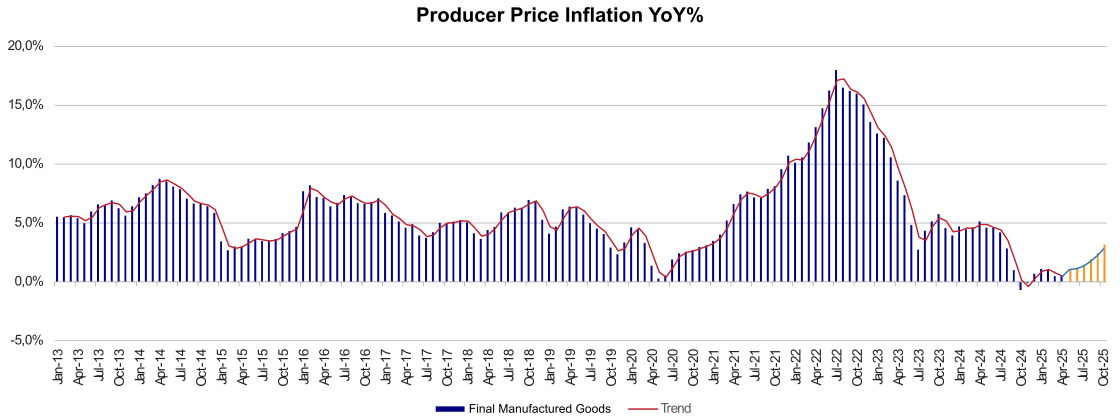
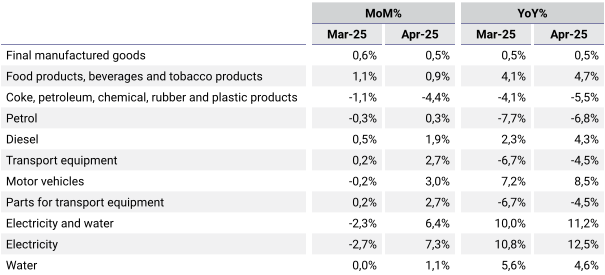
Although deflation persists in several categories, significant annual declines were recorded in products like coke, petroleum, chemicals, rubber, and plastics, which fell by 5.5% from a 4.1% drop in March. Transport equipment also decreased by another 4.5%, petrol by 6.8%, and parts for transport equipment by 4.5%. Production costs for intermediate goods rose by 8.5% in April following the 7.4% in March, surpassing the South African Reserve Bank’s (SARB) inflation target of 3% to 6% yet again. The month-on-month rise was a mere 2.4%, with inflationary pressure largely attributed to base effects from 2024 data. Key contributors to the annual increase included:
- Gold and metal ores: rising 21.7% and adding 5.8 percentage points.
- Non-ferrous metal ores: up 2.9%, contributing 1.5 percentage points.
- Stone quarrying, clay, and diamonds: up 26.0%, contributing 1.1 percentage points.
Mining costs in the primary sector increased by 4.1% in April following the 5.9% the prior month, while the agriculture sector saw a 4.4% rise, following March’s 2.4% increase. Overall, the producer price inflation for final manufactured goods trend still support favourable inflation expectations in South Africa, with consumer inflation at 2.8%, below 3.0%. Despite the rise in intermediate goods prices, particularly water and electricity, being above SARB’s target, current producer inflation figures suggest consumer inflation will remain low and stable in the near term. This stability might just prompt the Reserve Bank to lower the interest rate today (29th of May 2025) as inflation expectation from both the consumer and producer side of the economy seems to be contained for the time being.


