Copyright © Aluma Capital (Pty) Ltd. All rights reserved.
Aluma Capital (Pty) Ltd is a registered Financial Services Provider (FSP 46449) in terms of The Financial Advisory and Intermediary Services Act (37 of 2002)
June 11, 2025

Manufacturing Production

April 2025
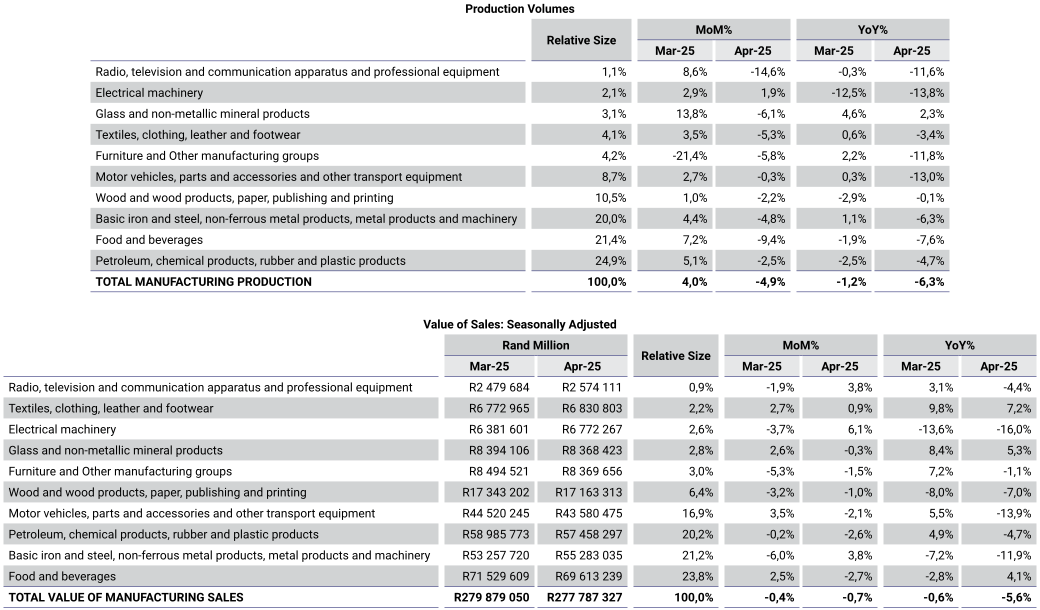
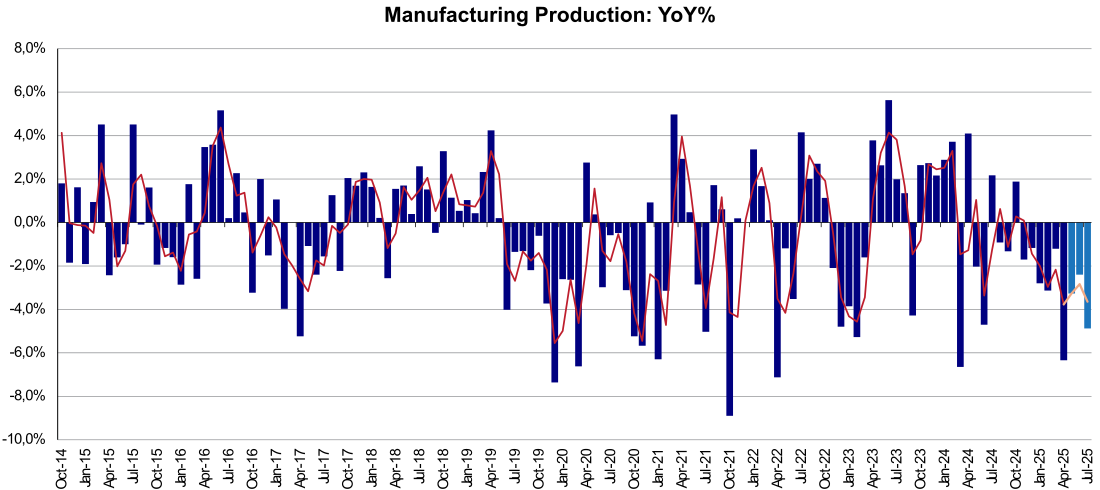
In April 2025, South Africa’s manufacturing output declined by 6.3%, following a 1.2% decrease in March—exceeding most analyst forecasts of a 2.8% contraction for April. The Purchasing Managers’ Index (PMI) fell from 48.7 in March to 44.7 in April, reflecting growing manufacturer apprehension.

Key contributing factors include:

  • Petroleum, Chemical, Rubber, and Plastic Products: -4.7%, reducing overall output by 1.0 percentage point.
  • Motor Vehicles and Transport Equipment: -13.0%, adding 1.2 points to the decline.
  • Food and Beverages: -7.6%, decreasing output by 1.8 points.
  • Iron, Steel, Metals, and Machinery: -6.3%, contributing 1.4 points to the contraction.

Seasonally adjusted sales dipped by 0.7% in April, and the rolling quarter ending in April contracted by 0.3% compared to the previous quarter. Declines were driven primarily by Basic Iron and Steel, Metals, and Machinery, which fell by 3.3%, while Motor Vehicles and Parts expanded by 6.5%, offsetting sector declines.

Manufacturing remains vital to South Africa’s economy, employing about 1.6 million people and contributing 12.5% to GDP in 2024. Employment increased slightly from 1.675 million in Q4 2024 to 1.677 million in Q1 2025, indicating a cautiously optimistic outlook despite April’s contraction.

However, sector sentiment remains cautious, with many business owners adopting a “wait-and-see” approach due to concerns over US tariffs impacting exports and ongoing US-China trade tensions. Despite current international uncertainties, companies continue to hold significant cash reserves, reflecting a cautious stance amid domestic and global economic complexities.


More Coverage

A sudden global shift has delivered much-needed relief for South Africa. Following a Middle East ceasefire, oil prices have dropped sharply and the Rand has strengthened—easing pressure on fuel costs and inflation. While earlier price spikes still weigh on the outlook, this combined correction offers a critical window for economic stability, improved consumer confidence, and renewed growth momentum.
South Africa finds itself balancing global energy shocks with decisive local action. As rising oil prices threaten to strain consumers and key industries, government intervention has softened the immediate impact—highlighting both the urgency of the moment and the need for smarter, more resilient fiscal tools to manage future volatility.
The South African Reserve Bank has opted for a “hawkish hold,” maintaining the repo rate at 6.75% despite headline inflation hitting a milestone low of 3.0%. Governor Lesetja Kganyago emphasised that while the inflation target has been met, the MPC remains wary of a potential “energy tax” on the economy, driven by global oil prices surging above $100 per barrel. Consequently, the Bank has adopted a cautious, forward-looking stance, slightly lowering the 2026 GDP growth forecast to 1.1% to account for these external shocks and ensure long-term currency stability.
South Africa faces renewed inflation risks despite brief market relief, driven by rising fuel costs and import dependence. The SARB is likely to hold interest rates to protect price stability.
This morning, South Africans received what should have been a crowning achievement for the South African Reserve Bank (SARB). Data from Stats SA revealed that the Consumer Price Index (CPI) cooled to 3.0% in February, down from 3.5% in January. This lands the country perfectly on the SARB’s new, more ambitious inflation target.