

Manufacturing Production
August 2025
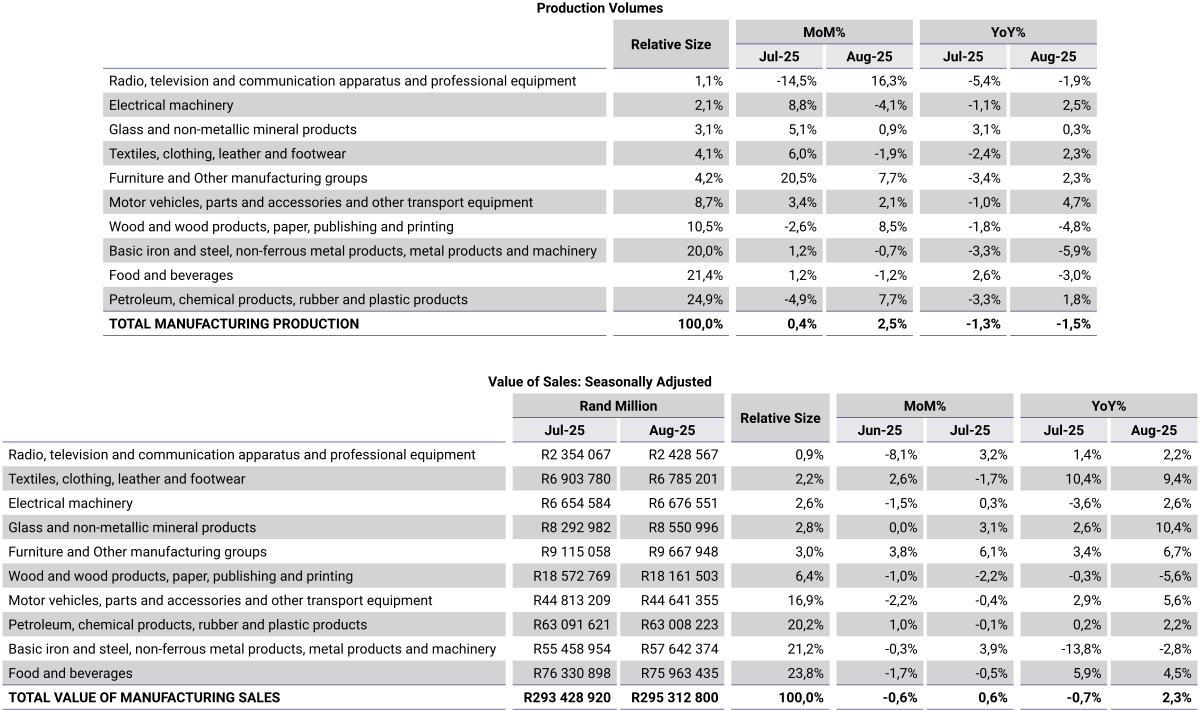
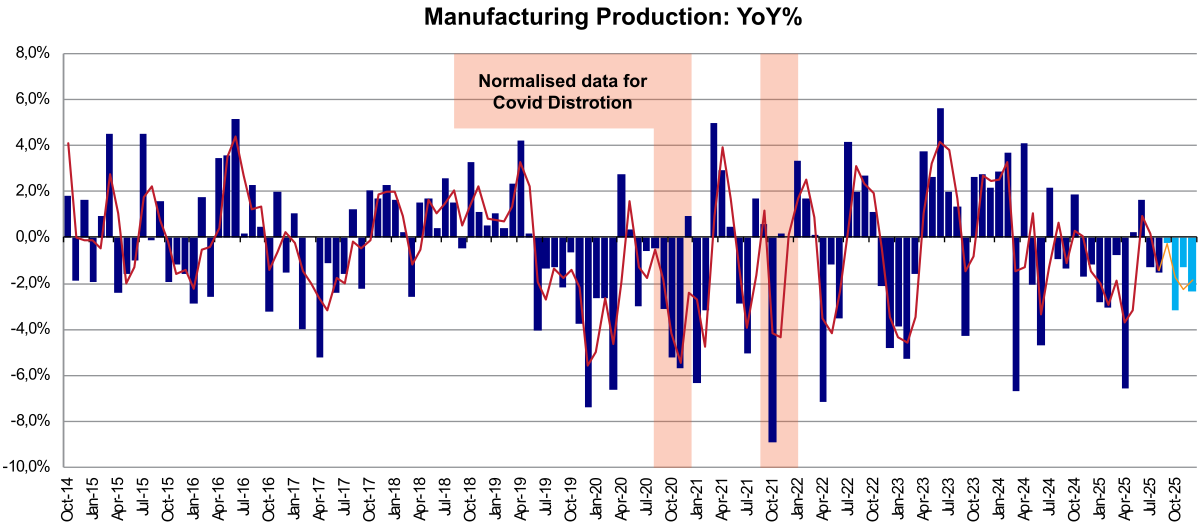
The iron and steel sector contracted by 3.3%, detracting 0.7 percentage points from manufacturing growth, while the wood and wood products industry declined by 1.8%, further reducing growth by 0.2 percentage points. These were among the main contributors to the sector’s overall performance downturn.
However, seasonally adjusted manufacturing production increased by 1.5% for the three months ending in August 2025 compared to the previous quarter ending in July. Of the ten industries, six experienced growths, with notable contributions from:
- Food and beverages, which expanded by 3.1%, contributed 0.8 percentage points.
- Petroleum, chemical products, rubber, and plastic products, which grew by 2.6%, adding 0.5 percentage points.
- Motor vehicles, parts, and accessories, which increased by 5.2%, contributed 0.4 percentage points.
Seasonally adjusted manufacturing sales also rose by 3.0% over the same three-month period compared to the previous quarter, with significant increases in:
- Food and beverages, which grew by 3.2%, adding 0.8 percentage points.
- Petroleum, chemical products, rubber, and plastic products, which expanded by 3.8%, contributing 0.8 percentage points.
- Motor vehicles, parts, and accessories, which increased by 4.8%, contributed 0.7 percentage points.
Manufacturing is a vital component of South Africa’s economy, employing approximately 1.6 million people and accounting for 12.5% of the GDP in 2024. Employment slightly decreased from 1.677 million in Q1 2025 to 1.672 million in Q2 2025. Nevertheless, GDP figures for the second quarter reveal a 1.8% quarterly increase in the manufacturing sector’s output. Challenges are anticipated from the third quarter onwards, due in part to US trade tariffs impacting output, sales, and employment.
Despite positive developments in certain industries, business owners are exercising caution amid concerns over US tariffs on exports and ongoing US-China trade tensions. This cautious sentiment is likely to intensify with the recent introduction of a 30% tariff on South African goods entering the US market, effective from August 7, 2025. Nonetheless, companies maintain substantial cash reserves, approximately R1.8 trillion, compared to R1.1 trillion in the first quarter of 2025, according to the Reserve Bank. This reflects a prudent approach amid current domestic and global economic uncertainties in the short to medium term.


