Copyright © Aluma Capital (Pty) Ltd. All rights reserved.
Aluma Capital (Pty) Ltd is a registered Financial Services Provider (FSP 46449) in terms of The Financial Advisory and Intermediary Services Act (37 of 2002)
June 5, 2025

International Trade and Trade Balance

April 2025
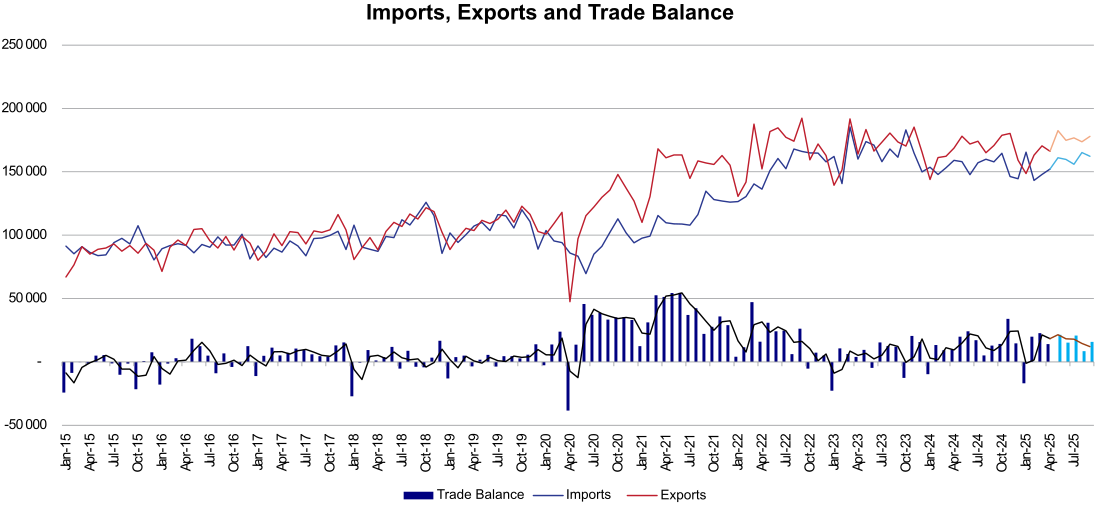
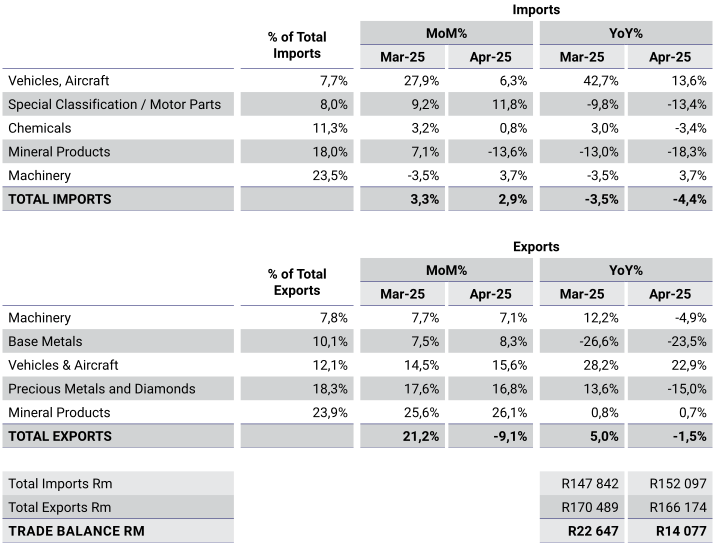
International trade measures South Africa’s demand for foreign goods and services compared to the demand for domestically produced products in global markets. The country mainly exports raw materials such as base metals, gold, precious metals, and minerals, while importing value-added products like vehicles, chemicals, and machinery.

In April 2025, South Africa recorded a trade balance surplus of R14.07 billion, indicating exports exceeded imports for that month. On an annual basis, total exports for the first four months of 2025 increased by 1.9% from R636.2 billion in 2024 to R648.4 billion in 2025. Meanwhile, imports contracted by 0.8% from R613.7 billion to R608.5 billion, reflecting a slowdown in demand.

Looking ahead, demand may see slight growth in 2025, supported by a recent interest rate cut announced at the end of May. Lower interest rates, combined with low inflation, a stable Rand, and reduced consumer and producer inflation, could further stimulate domestic demand in the coming months.


More Coverage

South Africa entered 2026 with inflation largely under control, offering some relief to households and policymakers alike. January’s consumer price data indicates modest price pressures and a cautiously stable economic environment, while ongoing global uncertainties and domestic cost drivers continue to shape the outlook for interest rates, consumer spending, and overall economic stability.
South Africa’s mining sector rebounded in December 2025, led by strong iron ore, manganese, platinum, and gold output and sales. Despite a slight quarterly dip in production and ongoing challenges from tariffs and trade tensions, the sector remains vital for employment, foreign exchange, and economic growth.
South Africa’s manufacturing sector closed 2025 weaker than expected, with key industries like iron, wood, and food driving declines. Despite a modest quarterly rise, trade tensions and tariffs are weighing on production and business sentiment, though firms hold strong cash reserves.
South Africa’s post-SONA outlook signals cautious optimism: improved investor confidence, infrastructure reform, and commodity gains offer growth potential, but success hinges on strict fiscal discipline, sustainable debt management, and investment-led policies. With debt near 78% of GDP, the upcoming budget must prioritise prudent spending, effective tax compliance, and private-sector-driven growth to ensure long-term economic stability and job creation.
0:00
0:00