Copyright © Aluma Capital (Pty) Ltd. All rights reserved.
Aluma Capital (Pty) Ltd is a registered Financial Services Provider (FSP 46449) in terms of The Financial Advisory and Intermediary Services Act (37 of 2002)
October 14, 2025

Manufacturing Production

August 2025
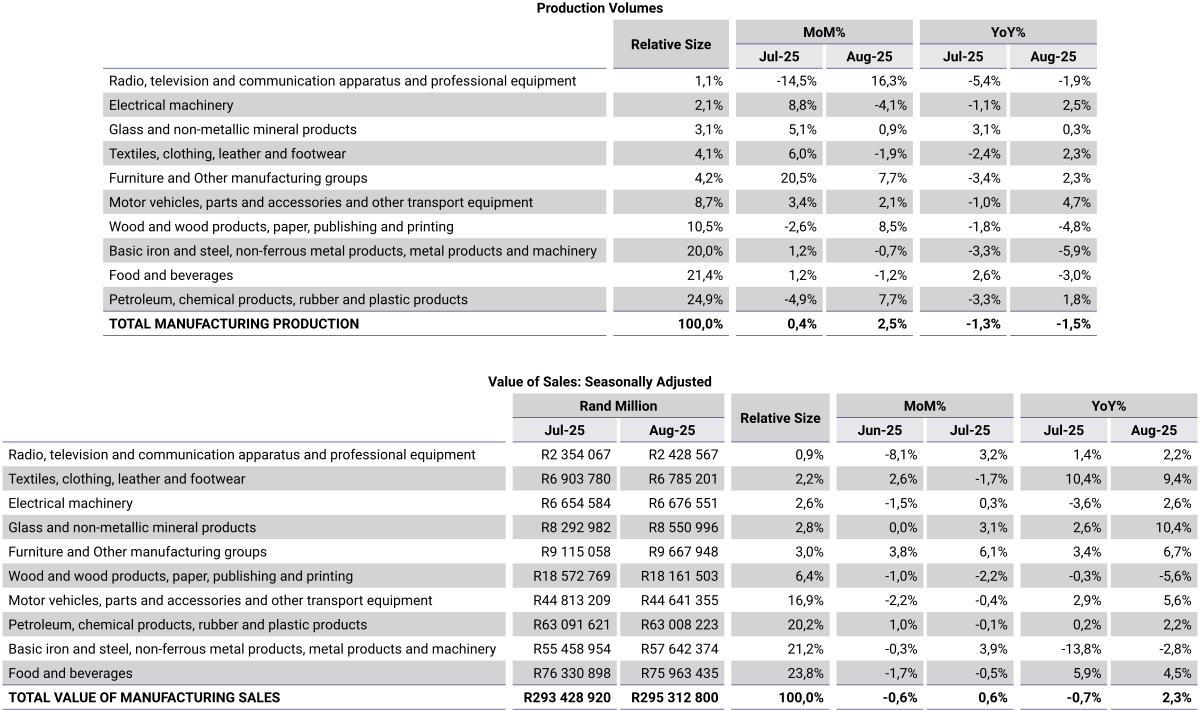
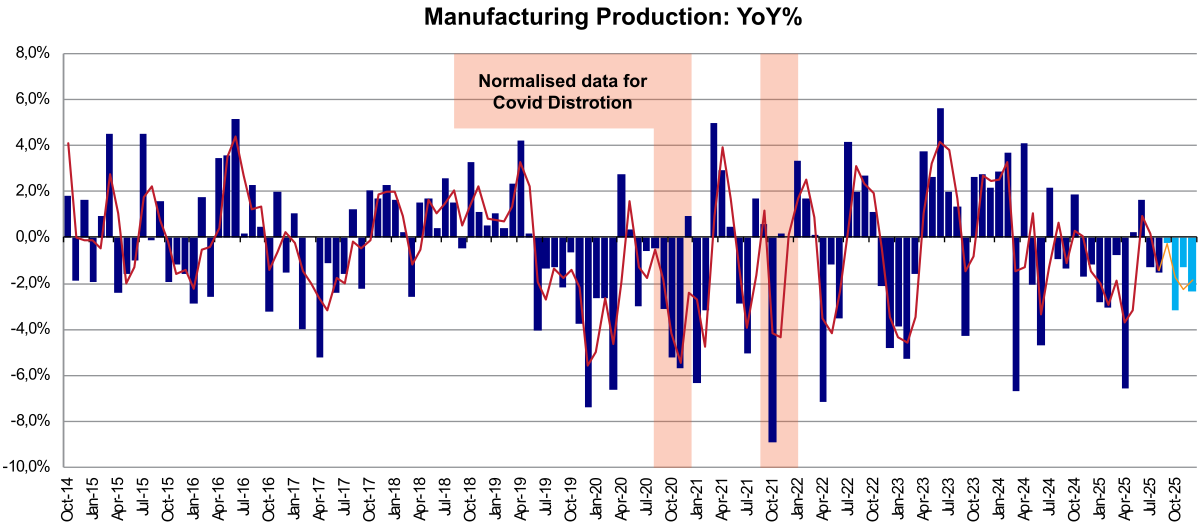
In August, South Africa’s manufacturing output further declined by 1.5%, following a 1.3% decrease in July. This downturn was significantly below market expectations, which had forecasted a 0.3% increase for August. The Purchasing Managers’ Index (PMI) also fell by 1.4 points, from 50.8 in July to 49.5 in August 2025, indicating a less favourable business climate anticipated by manufacturers for the month.

The iron and steel sector contracted by 3.3%, detracting 0.7 percentage points from manufacturing growth, while the wood and wood products industry declined by 1.8%, further reducing growth by 0.2 percentage points. These were among the main contributors to the sector’s overall performance downturn.

However, seasonally adjusted manufacturing production increased by 1.5% for the three months ending in August 2025 compared to the previous quarter ending in July. Of the ten industries, six experienced growths, with notable contributions from:

  • Food and beverages, which expanded by 3.1%, contributed 0.8 percentage points.
  • Petroleum, chemical products, rubber, and plastic products, which grew by 2.6%, adding 0.5 percentage points.
  • Motor vehicles, parts, and accessories, which increased by 5.2%, contributed 0.4 percentage points.

Seasonally adjusted manufacturing sales also rose by 3.0% over the same three-month period compared to the previous quarter, with significant increases in:

  • Food and beverages, which grew by 3.2%, adding 0.8 percentage points.
  • Petroleum, chemical products, rubber, and plastic products, which expanded by 3.8%, contributing 0.8 percentage points.
  • Motor vehicles, parts, and accessories, which increased by 4.8%, contributed 0.7 percentage points.

Manufacturing is a vital component of South Africa’s economy, employing approximately 1.6 million people and accounting for 12.5% of the GDP in 2024. Employment slightly decreased from 1.677 million in Q1 2025 to 1.672 million in Q2 2025. Nevertheless, GDP figures for the second quarter reveal a 1.8% quarterly increase in the manufacturing sector’s output. Challenges are anticipated from the third quarter onwards, due in part to US trade tariffs impacting output, sales, and employment.

Despite positive developments in certain industries, business owners are exercising caution amid concerns over US tariffs on exports and ongoing US-China trade tensions. This cautious sentiment is likely to intensify with the recent introduction of a 30% tariff on South African goods entering the US market, effective from August 7, 2025. Nonetheless, companies maintain substantial cash reserves, approximately R1.8 trillion, compared to R1.1 trillion in the first quarter of 2025, according to the Reserve Bank. This reflects a prudent approach amid current domestic and global economic uncertainties in the short to medium term.


More Coverage

South Africa’s story is shifting—from the frustration of load shedding to the emergence of a bold new opportunity. As we move through 2026, an unexpected partnership between energy and cryptocurrency is reshaping the economic landscape. With Eskom exploring ways to monetise surplus solar power and SAA embracing Bitcoin for transactions, the country is stepping into a new era where digital finance and energy innovation converge—unlocking fresh potential for businesses, investors, and growth.
Discover the dynamic shifts within South Africa’s mining sector with our latest analysis. In a remarkable February 2026 performance, mining activities surged by 9.7%, spearheaded by dramatic increases in PGM, chromium ore, manganese, and gold production. Despite a quarterly dip, February’s nominal sales skyrocketed by 58.3%, driven by remarkable gains in platinum and gold. As the backbone of South Africa’s economy, the sector faces evolving global challenges and opportunities, from new US tariff measures to geopolitical tensions affecting global trade and energy prices. Stay ahead with insights into the sector’s resilience and strategic importance. Read the full article to understand the trends shaping South Africa’s economic landscape.
Discover how South Africa is navigating the turbulent waters of global economic pressures and local inflation with a strategic fuel price adjustment and a major boost from a R415 billion investment windfall. As rising Brent Crude prices and a fluctuating Rand impact fuel costs and inflation forecasts, all eyes are on the South African Reserve Bank’s next move. Meanwhile, the Sixth South Africa Investment Conference has sparked optimism, with substantial commitments in the energy and technology sectors, promising a resilient economic future. Dive into the full article to explore the intricate balance between surviving immediate economic challenges and positioning South Africa as a hub for global investment amidst a world in flux.
South Africa’s reserves fell in USD terms in March 2026 as the Rand weakened amid Middle East tensions, though higher gold prices supported reserves in Rand terms. Rising oil prices and currency pressure point to higher inflation risks, while ongoing geopolitical tensions and US trade measures are likely to keep markets volatile.
A sudden global shift has delivered much-needed relief for South Africa. Following a Middle East ceasefire, oil prices have dropped sharply and the Rand has strengthened—easing pressure on fuel costs and inflation. While earlier price spikes still weigh on the outlook, this combined correction offers a critical window for economic stability, improved consumer confidence, and renewed growth momentum.