SARB opts for Strategic Resilience
Repo Rate Held at 6.75% Despite Inflation Milestone
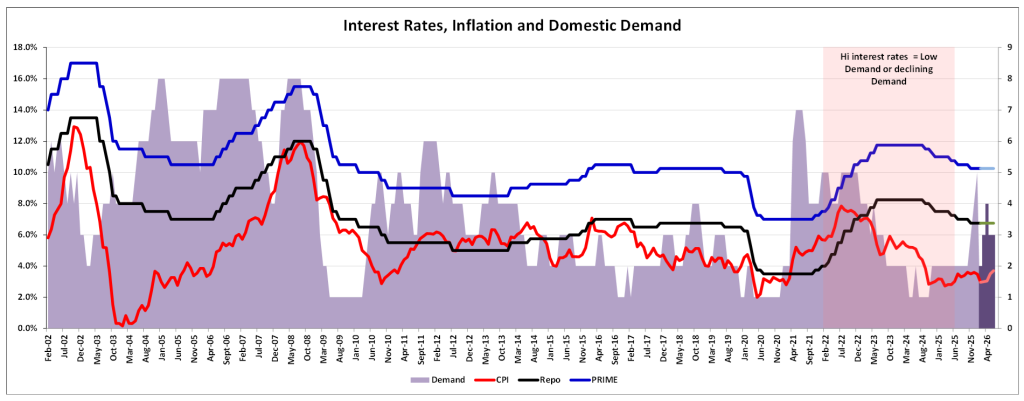
In a move that underscores the South African Reserve Bank’s (SARB) commitment to long-term price stability over short-term sentiment, the Monetary Policy Committee (MPC) today announced it would maintain the repo rate at 6.75%. This leaves the prime lending rate steady at 10.25%, reflecting a “hawkish hold” amid an increasingly unpredictable global economic climate.
A Milestone Met, but Not Won
Governor Lesetja Kganyago opened the address by acknowledging a significant achievement: South Africa’s headline inflation cooled to 3.0% in February, successfully hitting the lower bound of the SARB’s target range. Under normal circumstances, such a figure might have cleared the path for a rate cut to stimulate lacklustre domestic growth.
However, the Governor was quick to temper market expectations. “While we welcome the 3% print, the MPC must remain forward-looking,” Kganyago noted. The Bank’s Quarterly Projection Model suggests that this dip may be temporary, with inflation expected to drift back toward the 4.5% midpoint as the year progresses.
The “Energy Tax” and Global Headwinds
The primary catalyst for the Bank’s caution is the renewed volatility in global energy markets. With Brent Crude stubbornly hovering above the $100 per barrel mark due to ongoing geopolitical tensions in the Middle East, the Governor described the situation as an “unforeseen energy tax” on the domestic economy.
The SARB is particularly concerned about “second-round effects”, the risk that sustained high fuel prices will eventually seep into food production and transport costs, de-anchoring inflation expectations. By holding rates steady, the MPC is effectively building a protective buffer to shield the Rand and the domestic consumer from these external shocks.
Revised Growth Outlook
The ripple effects of global instability have also prompted a slight downward revision of South Africa’s growth prospects. The SARB now forecasts GDP growth for 2026 at 1.1%, down from the previous estimate of 1.2%. This adjustment reflects tighter global financial conditions and the anticipated impact of high energy costs on the manufacturing and mining sectors.
Investment Implications
For the investment community, the SARB’s decision signals a preference for currency stability and predictable policy over aggressive easing. The Rand’s relative resilience near the R16.98/$ level suggests that the market respects the Bank’s conservative stance.
As the Governor concluded, the MPC remains prepared to act should the inflation outlook deteriorate, but for now, the “wait-and-see” approach is deemed the most prudent path to navigate the current global turbulence.