Copyright © Aluma Capital (Pty) Ltd. All rights reserved.
Aluma Capital (Pty) Ltd is a registered Financial Services Provider (FSP 46449) in terms of The Financial Advisory and Intermediary Services Act (37 of 2002)
August 11, 2025

South African

Gold and Foreign Exchange Reserves

July 2025
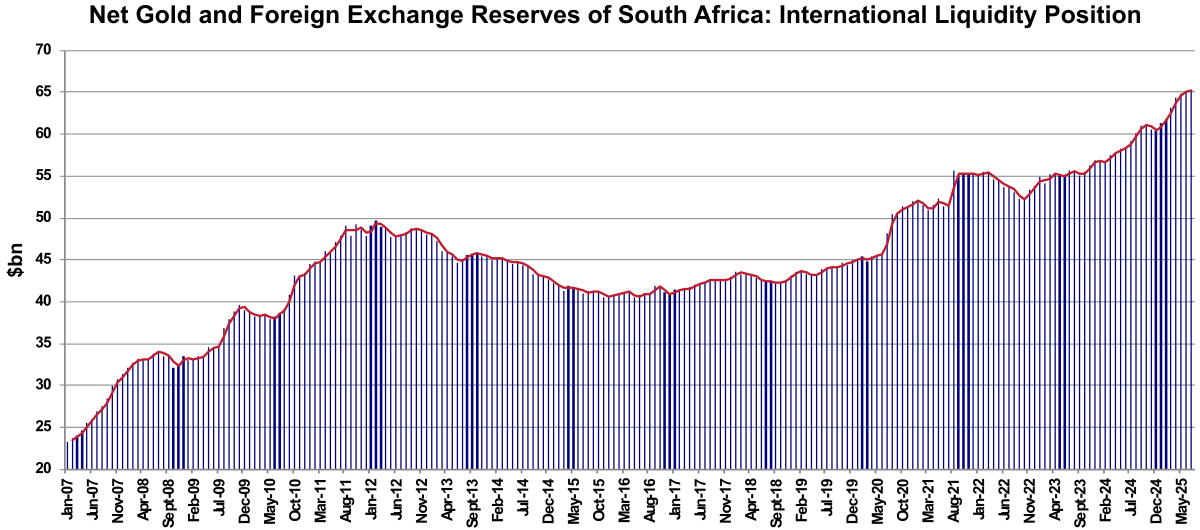
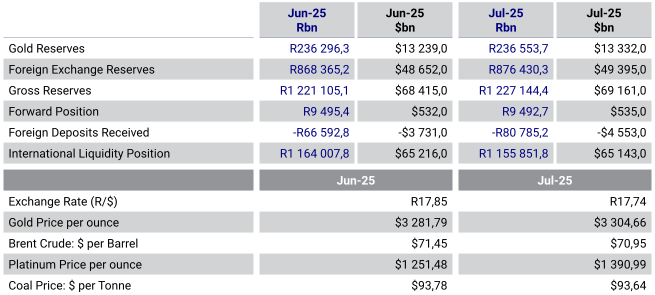
The South African International Liquidity Position, indicated by Net Gold and Foreign Exchange Reserves, declined slightly in both USD and Rand terms for July 2025. The Rand strengthened by 10 cents against the US Dollar in July, following a 30-cent appreciation in the previous month. Reserves decreased by approximately USD 73 million, after nearly a USD 400 million increase in June 2025. The high gold price continued to positively influence reserves for July, with gold remaining 36.3% higher than the same month in 2024.

In USD terms, foreign reserves also saw a marginal decline in July compared to the previous month. The Reserve Bank continued purchasing US Dollars on the open market to bolster South Africa’s international liquidity amidst ongoing global market uncertainties. This strategy is also influenced by the upcoming expiry of trade tariff exemptions linked to “Liberation Day,” which were due to expire on 7 August 2025. At that point, 30% tariffs on South African exports to the US would be implemented.

Key commodities such as gold, oil, platinum, and coal offer valuable insights into South Africa’s mining sector and inflation outlook. These trends will be critical in assessing inflation prospects, considering international developments and potential trade restrictions with the US following the August tariff measures.

Monitoring these movements is vital, as inflation expectations will influence the South African Reserve Bank’s (SARB) interest rate decisions later in 2025. A stable Rand and lower oil prices support more favourable inflation forecasts. However, ongoing global geopolitical tensions and potential changes to trade agreements, such as the African Growth and Opportunity Act (AGOA), could result in market volatility.

With recent US tariffs and the Federal Reserve holding interest rates steady again in July 2025, the Rand is likely to experience continued volatility in the short term, impacting both international markets and South Africa’s economic outlook for the remainder of 2025.


More Coverage

October 2025
In October 2025, producer price inflation rose to 2.9%, an increase from 2.3% in September. However, on a monthly basis, there was a slight decline in producer prices, down by 0.1%.
September 2025
Retail sales in South Africa rose by 3.1% in September, slightly exceeding market expectations of 3.0%, as anticipated by analysts for that month. This growth indicates a continuing recovery in consumer demand within the economy.
The South African Reserve Bank (SARB) has taken a prudent and measured step by reducing its base interest rate from 7.0% to 6.75%, marking a significant moment in the country’s monetary policy trajectory. This decision, made by the Monetary Policy Committee (MPC), underscores the bank’s cautious optimism about South Africa’s economic outlook amidst a complex global backdrop.
October 2025
In September 2025, the Consumer Price Index (CPI) saw a modest rise to 3.4%, slightly up from 3.3% in August, yet just below the analysts’ forecast of 3.5%.
Cautious Optimism Amidst Inflation and Reform Momentum
As the Monetary Policy Committee (MPC) of the South African Reserve Bank (SARB) prepares to announce its interest rate decision later this week, market watchers are closely divided between expectations of a modest cut and maintaining the status quo. With approximately 70% of economists foreseeing a 25-basis point reduction from 7.00% to 6.75%, the prevailing sentiment reflects confidence in economic stabilization. However, a significant proportion remain cautious, suggesting that the SARB may choose to hold interest rates unchanged for another month, given the current inflation trajectory and recent developments in fiscal discipline.
0:00
0:00