Copyright © Aluma Capital (Pty) Ltd. All rights reserved.
Aluma Capital (Pty) Ltd is a registered Financial Services Provider (FSP 46449) in terms of The Financial Advisory and Intermediary Services Act (37 of 2002)
May 30, 2025

Private Sector Credit Extension (PSCE)

April 2025
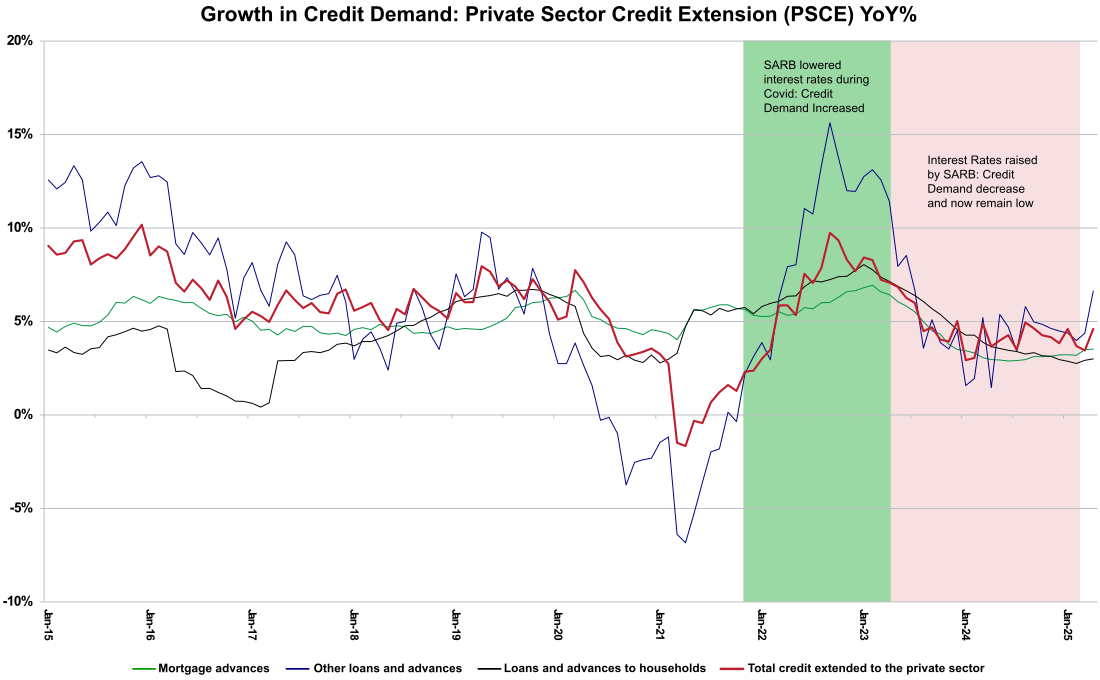
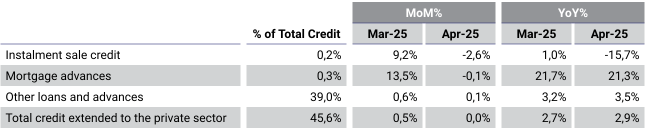
In April 2025, credit demand increased by 4.6%, slightly below March’s 5.8% but above market expectations of 3.25%. Overall, credit growth has gained momentum since interest rate cuts began in September 2024, with most subcategories showing enhancements.

Mortgage advances and credit for fixed asset purchases remain relatively subdued. Despite cumulative interest rate reductions totalling 175 basis points since September 2024—culminating in another 25-basis point cut on 29 May 2025—property demand has not yet responded strongly. The full benefits of lower rates are anticipated to materialise later in 2025, as household disposable incomes improve supported by stable market sentiment.

In April, instalment credit sales rose marginally by 0.3%, following a 0.7% increase in March, with an annual growth rate of 5.8%. Over the past two years, consumers have increasingly relied on short-term credit to manage rising living costs and financial pressures, reflected in a 6.6% jump in other loans and advances after a 4.4% rise in the previous month.

Growth in property and fixed asset purchases remains modest; mortgage advances increased by just 3.5% in April 2025, like March. This subdued activity stems from late-2023 when rising interest rates constrained property demand. However, with recent rate cuts, particularly the 25-basis point reduction in May 2025, along with anticipated further easing, demand for property and fixed assets is expected to pick up as household incomes stabilise and increase.

As inflation remains favourable, ongoing rate reductions should improve disposable incomes further, leading to increased demand for goods and fixed assets heading into the second quarter of 2025.


More Coverage

Discover how South Africa is navigating the turbulent waters of global economic pressures and local inflation with a strategic fuel price adjustment and a major boost from a R415 billion investment windfall. As rising Brent Crude prices and a fluctuating Rand impact fuel costs and inflation forecasts, all eyes are on the South African Reserve Bank’s next move. Meanwhile, the Sixth South Africa Investment Conference has sparked optimism, with substantial commitments in the energy and technology sectors, promising a resilient economic future. Dive into the full article to explore the intricate balance between surviving immediate economic challenges and positioning South Africa as a hub for global investment amidst a world in flux.
South Africa’s reserves fell in USD terms in March 2026 as the Rand weakened amid Middle East tensions, though higher gold prices supported reserves in Rand terms. Rising oil prices and currency pressure point to higher inflation risks, while ongoing geopolitical tensions and US trade measures are likely to keep markets volatile.
A sudden global shift has delivered much-needed relief for South Africa. Following a Middle East ceasefire, oil prices have dropped sharply and the Rand has strengthened—easing pressure on fuel costs and inflation. While earlier price spikes still weigh on the outlook, this combined correction offers a critical window for economic stability, improved consumer confidence, and renewed growth momentum.
South Africa finds itself balancing global energy shocks with decisive local action. As rising oil prices threaten to strain consumers and key industries, government intervention has softened the immediate impact—highlighting both the urgency of the moment and the need for smarter, more resilient fiscal tools to manage future volatility.
The South African Reserve Bank has opted for a “hawkish hold,” maintaining the repo rate at 6.75% despite headline inflation hitting a milestone low of 3.0%. Governor Lesetja Kganyago emphasised that while the inflation target has been met, the MPC remains wary of a potential “energy tax” on the economy, driven by global oil prices surging above $100 per barrel. Consequently, the Bank has adopted a cautious, forward-looking stance, slightly lowering the 2026 GDP growth forecast to 1.1% to account for these external shocks and ensure long-term currency stability.