

Employment Statistics in South Africa: 2025Q4
South Africa’s Q4 2025 employment data shows modest improvement, with the unemployment rate easing to 31.4% and 44,000 formal jobs added. While gains in sectors like transport and finance supported growth, manufacturing and the informal sector remained under pressure. Overall, the figures point to cautious resilience amid ongoing global economic uncertainty.

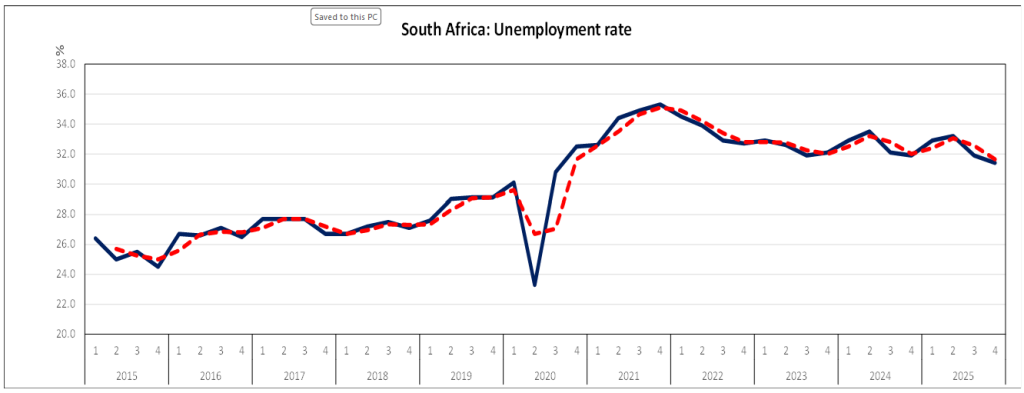
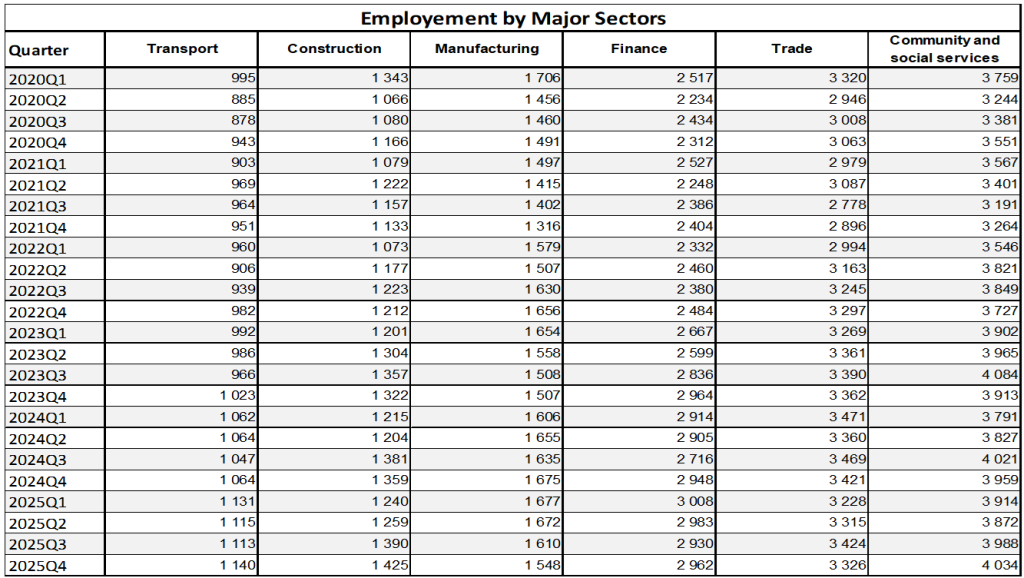
The employment statistics for the fourth quarter of 2025 largely paint a positive picture across various sectors, as shown in the preceding table. Most sectors saw employment increase from the third to the fourth quarter of 2025, though a few experienced a decline in job opportunities during this period. The unemployment rate slightly decreased from 31.9% in the previous quarter to 31.4% in Q4 2025. Similarly, the expanded unemployment rate marginally dropped from 42.4% to 42.1%.
In South Africa, formal non-agricultural employment rose by 44,000, increasing from 17.05 million in the third quarter to 17.09 million by Q4 2025. Meanwhile, the number of unemployed individuals fell by 172,000, settling at approximately 7.8 million. The working-age population grew by about 534,000 in the fourth quarter, marking an increase of roughly 0.8%.
Employment rates improved in four of the nine provinces, with notable increases in the Northern Cape (+17,000), Western Cape (+93,000), North West (+36,000), and Mpumalanga (+37,000). However, declines were primarily seen in the Trade and Manufacturing sectors, while employment grew in the Transport, Finance, and Utilities sectors. The informal sector, however, lost 293,000 jobs in the fourth quarter of 2025.
Overall, these employment figures are somewhat encouraging, with the unemployment rate performing better than the consensus forecast of 31.7% for Q4 2025. The increase in employment can be attributed to growth in select sectors, although manufacturing is showing signs of strain due to the impact of Trump’s tariffs. Ongoing international uncertainties, including the US tariff war against China and other countries, as well as concerns about the future of the AGOA agreement beyond the 2026 extension, are likely to affect economic activity and job creation in South Africa in the short to medium term.


