

Manufacturing Production
September 2025
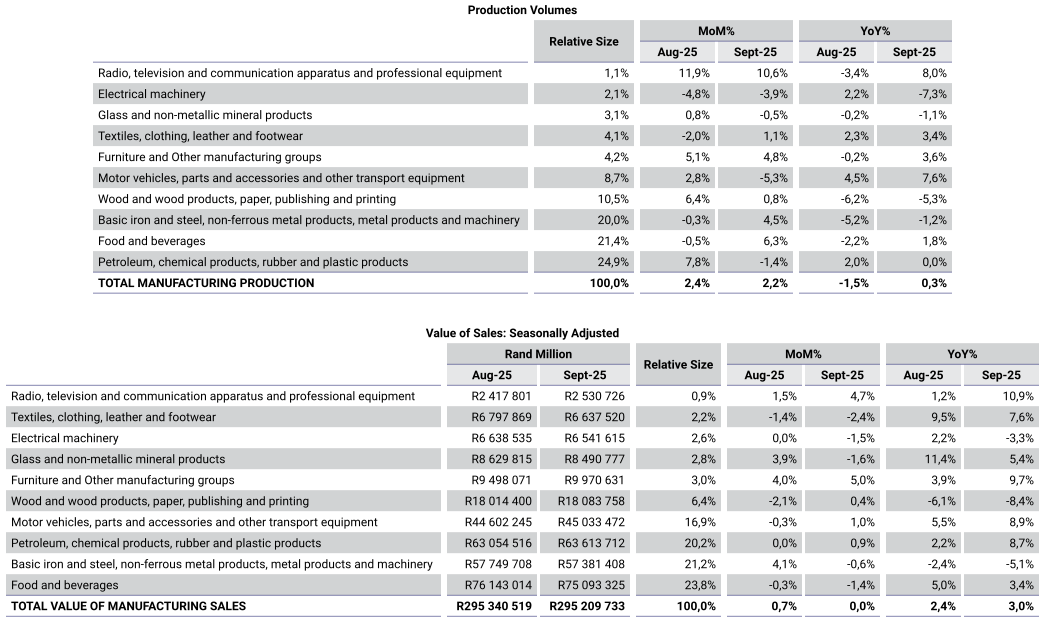
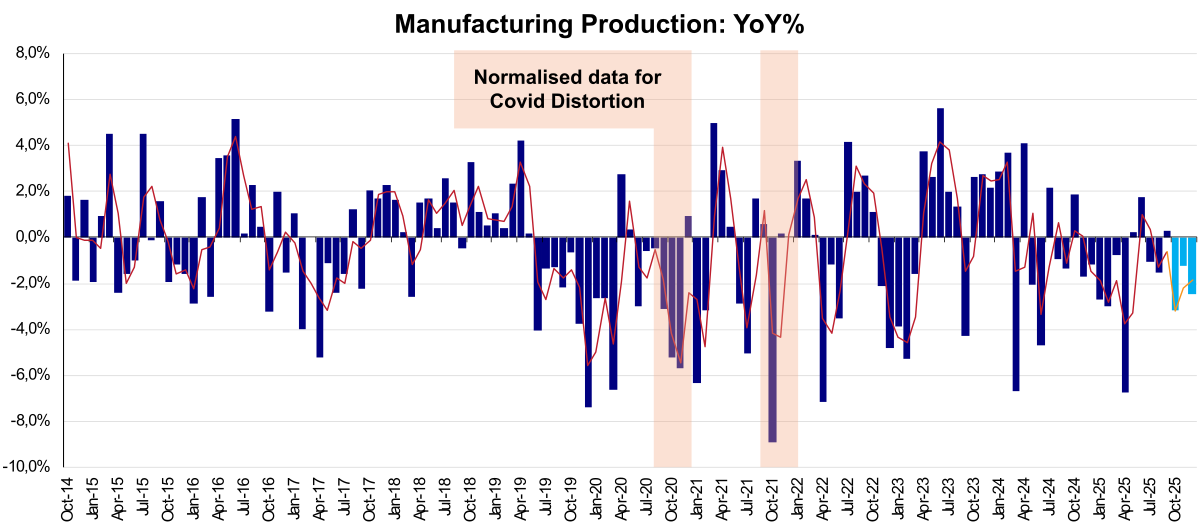
The motor vehicles, parts, and accessories division, along with other transport equipment, was the largest contributor to manufacturing growth, rising by 7.6% and adding 0.5 percentage points to the overall performance. Additionally, the food and beverages sector grew by 1.8%, contributing another 0.5 percentage points. These sectors were significant drivers of the sector’s overall performance upswing for September 2025.
However, when seasonally adjusted, manufacturing production only saw a 0.1% increase in the third quarter compared to the previous quarter. Of the ten industries surveyed, four reported growth, with the noteworthy contributions from:
- Food and beverages, which expanded by 1.9%, contributing 0.5 percentage points.
- Furniture and other divisions, which grew by 8.4%, adding 0.3 percentage points.
The wood and wood products sector contracted by 5.4%, detracting 0.6 percentage points from the quarterly growth figure.
Seasonally adjusted manufacturing sales rose by 1.9% during the third quarter compared to the previous quarter, with significant growth in:
- Petroleum, chemical products, rubber, and plastic products, which increased by 3.4%, contributing 0.7 percentage points.
- Basic iron and steel, non-ferrous metal products, metal products, and machinery, which grew by 1.9%, adding 0.4 percentage points.
- Motor vehicles, parts, and accessories, which rose by 2.5%, also contributing 0.4 percentage points.
Manufacturing is a key component of South Africa’s economy, employing around 1.6 million people and comprising 12.5% of GDP in 2024. Employment inched down from 1.672 million in Q2 2025 to 1.610 million in Q3 2025. Nevertheless, GDP figures for Q2 showed a 1.8% increase in manufacturing output. If current monthly data is analysed, a slight increase is expected again for Q3. Challenges are anticipated from Q3 onwards, partly due to US trade tariffs affecting output, sales, and employment. Tensions have risen recently, with President Trump criticising South Africa and its position in the G20.
Despite some positive developments in various sectors in September, business owners remain cautious due to concerns over US tariffs on exports and ongoing US-China trade tensions. This cautious sentiment is reflected in businesses holding R1.8 trillion in cash reserves in commercial banks, poised to reinvest in South Africa if conducive economic policies and conditions are established to boost business confidence and unlock the country’s growth potential in the medium to long term.


