

A View on Demand in the Economy
Retail Sales Performance
September 2025

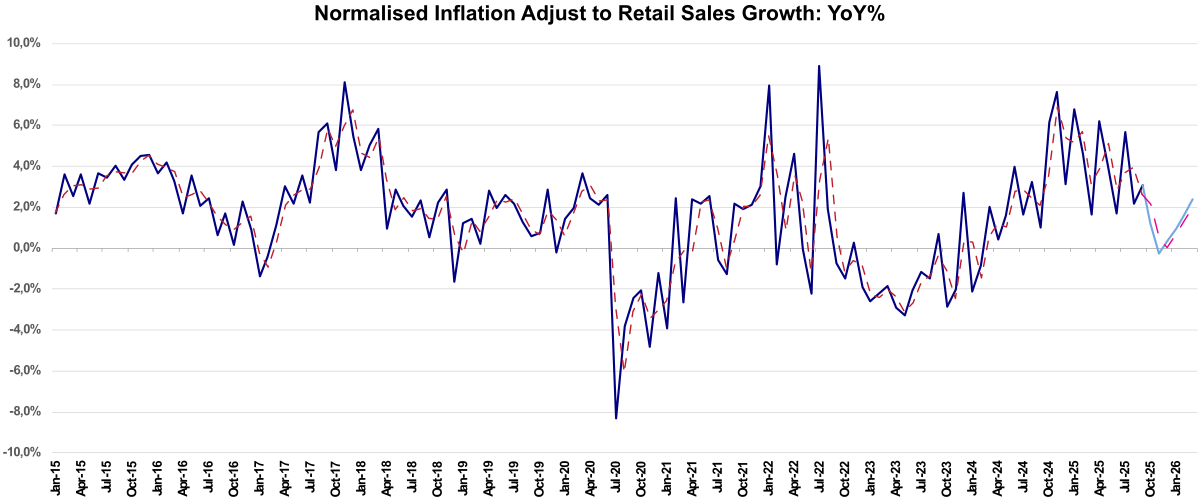
The increase in consumer demand, as shown by the retail sales figures, occurs amidst several challenges facing households. These challenges include rising living costs, as highlighted by the South African Reserve Bank; sluggish wage growth due to slow economic expansion; and uncertainties related to South Africa’s international trade with the United States. Ongoing diplomatic tensions between Washington and Pretoria, the failure to conclude a new trade agreement, and the expiry of the African Growth and Opportunity Act (AGOA) deal with the US in September 2025 continue to foster a cautious environment for consumer spending.
The 3.1% rise in September reflects a sustained recovery trend observed from April to September, likely bolstered by interest rate cuts and monetary easing measures implemented from September 2024 to August 2025.
The South African Chamber of Commerce and Industry (SACCI) noted a slight increase in business confidence, with its index climbing from 116.7 in July to 121.1 in September 2025. In contrast, the FNB/BER consumer confidence index fell from -10 points in the second quarter to -13 in the third quarter of 2025, underscoring consumers’ cautious approach to spending in the current economic climate. Although inflation remains low and the Reserve Bank reduced interest rates in January and July 2025, these factors are gradually influencing consumer behaviour and spending patterns.
Key contributors to the growth in September’s retail sales included:
- General dealers: up 1.9%, contributing 0.9 percentage points
- Retailers of textiles, clothing, footwear, and leather goods: increased by 4.4%, adding 0.7 percentage points
- Retailers of household furniture, appliances, and equipment: grew by 11.4%, contributing 0.5 percentage points
The growth in retail sales in September suggests ongoing positive momentum from July, indicating a steady, yet cautious, recovery in consumer demand. The interest rate cuts made between September 2024 and July 2025 have alleviated household financial pressures, reinforcing the gradual increase in demand over the past four months and bolstering the recent retail sales figures. It is important to note that interest rate changes typically take 12 to 24 months to yield measurable effects within the economy; thus, these reductions are only beginning to show results.
Maintaining this momentum will be crucial throughout 2025, as consumer spending is a key driver of South Africa’s economic growth and employment. This is especially important given the 0.8% GDP growth recorded in the second quarter of 2025. The interest rate reduction in November 2025 is expected to further sustain and enhance consumer demand into late 2025 and early 2026.


