

Producer Price Inflation
November 2025
Significant cost increases were noted in the following categories:
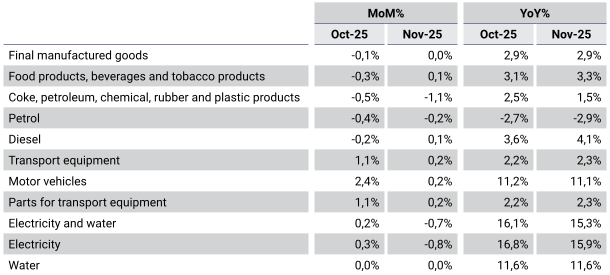
- Food and beverage production rose by 3.3%, contributing 1.0 percentage points to the monthly increase.
- Furniture and other manufacturing production surged by 11.1%, adding 0.5 percentage points to the overall monthly rise.
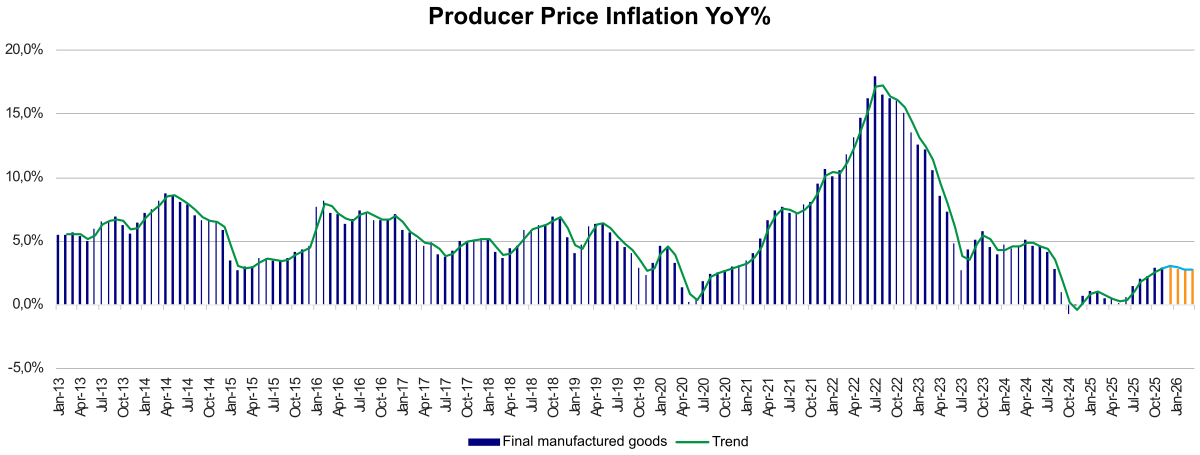
The previous deflationary trend in producer inflation appears to have ended, with only petrol prices experiencing a decline—falling by 2.9% year-on-year in November 2025, as the Rand strengthened against the US Dollar and oil prices decreased slightly during the month.
In November, production costs for intermediate goods rose by 10.7%, down from 10.9% in October. This indicates a clear inflationary trend that demands attention, as this increase surpasses the South African Reserve Bank’s (SARB) new inflation target range of 2% to 4%. The month-on-month increase of 0.3% further signals emerging inflationary pressures in the manufacturing of intermediate goods. Annual growth remains significantly influenced by base effects from 2024 data.
The annual increase was mainly driven by:
- Basic and Fabricated Metals, which surged by 21.7%, contributing 10.9 percentage points to the overall figure.
- Sawmilling and Wood, where prices rose by 8.5%, adding 0.9 percentage points to the overall growth of production in intermediate goods in South Africa.
On a monthly basis, Basic and Fabricated Metals led the increase, rising by 1.0% and contributing 0.6 percentage points to the total.
In the primary sector, mining costs escalated by 19.9% in November, following an 18.4% increase in October. In contrast, the agriculture sector experienced another decrease in production costs, down by 2.4%, following a 1.8% decline in October.
Overall, the trend in producer price inflation for final manufactured goods currently supports positive inflation expectations in South Africa for the short to medium term. Consumer inflation remains low at 3.5% for November, closely aligning with the SARB’s target of 3%. Although prices for certain intermediate goods—particularly water and electricity—still exceed the target range, current figures suggest that consumer inflation is likely to remain low and stable in the near future.
This price stability provides the Reserve Bank with an opportunity to consider lowering interest rates during the January 2026 Monetary Policy Committee (MPC) meeting, should current price increases persist in December 2025 and January 2026. Moreover, both consumer and producer inflation expectations appear to be well-managed at present.


