

A view on Demand in the Economy: Retail Sales performance – February 2026 Data
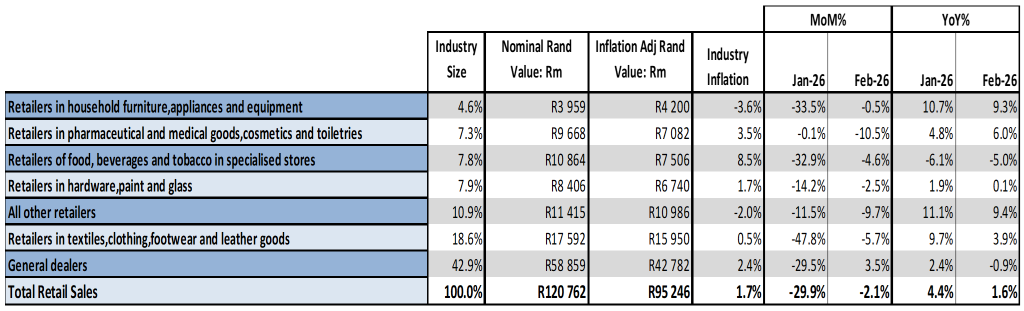
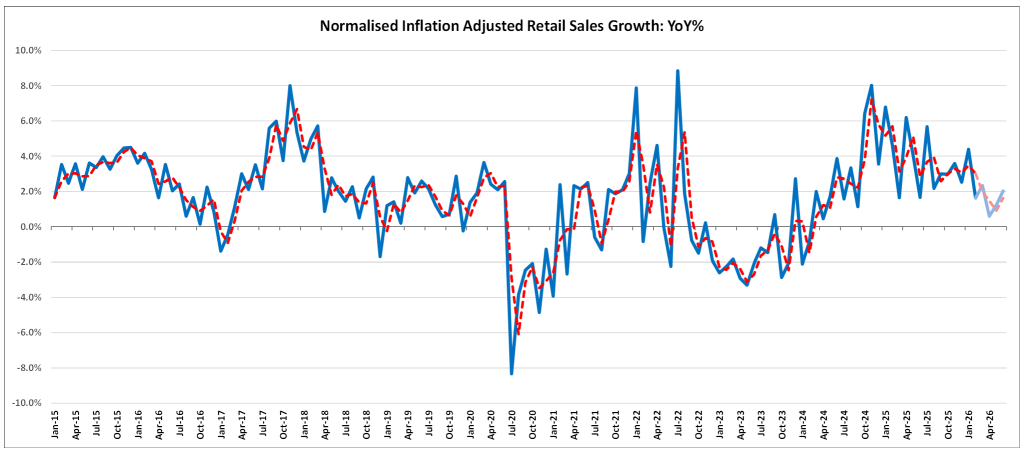
In February 2026, retail sales in South Africa rose by 1.6%, well below the 4.8% analysts had anticipated. This growth underscores a continued but fragile recovery in consumer demand.
Households, however, still face several challenges. The South African Reserve Bank and February 2026 consumer inflation data point to ongoing increases in administered prices and housing and utility costs, each rising by more than 4.0%. Sluggish wage growth amid limited economic expansion remains a concern, while uncertainties in international trade — including diplomatic tensions between Washington and Pretoria and the lapse of the African Growth and Opportunity Act (AGOA) in September 2025 — have weighed on domestic demand and encouraged cautious spending through late 2025.
February’s 1.6% gain continues the recovery trend from April 2025 to February 2026, even though consumer demand growth is slower than expected at this stage. The February expansion in retail sales is likely still supported by interest-rate cuts and monetary easing implemented between September 2024 and November 2025. The South African Chamber of Commerce and Industry (SACCI) recorded a small increase in business confidence (the index rose from 131.4 in January to 134.8 in February 2026). The FNB/BER consumer confidence index also improved slightly, from -13 in 2025Q3 to -9 in 2025Q4, reflecting persistent consumer caution. Although inflation is relatively low and the Reserve Bank reduced rates in January, July and November 2025, the full effects on consumer behaviour will take time to materialise as interest rate changes can take up to 18 months to filter through the economy.
February’s retail growth was driven by:
- Other retailers: up 9.4%, contributing 1.0 percentage points
- retailers in textiles, clothing, footwear and leather goods: up 3.9%, contributing 0.6 percentage points
The sustained momentum since July suggests a steady, if cautious, recovery. Interest-rate cuts from September 2024 to November 2025 have eased some household financial pressure and still support demand recovery at this stage, but international developments, higher fuel prices, and a possible increase in interest rates may weigh on consumer demand going forward.


