

South African Gold and Foreign Exchange Reserves for July 2026
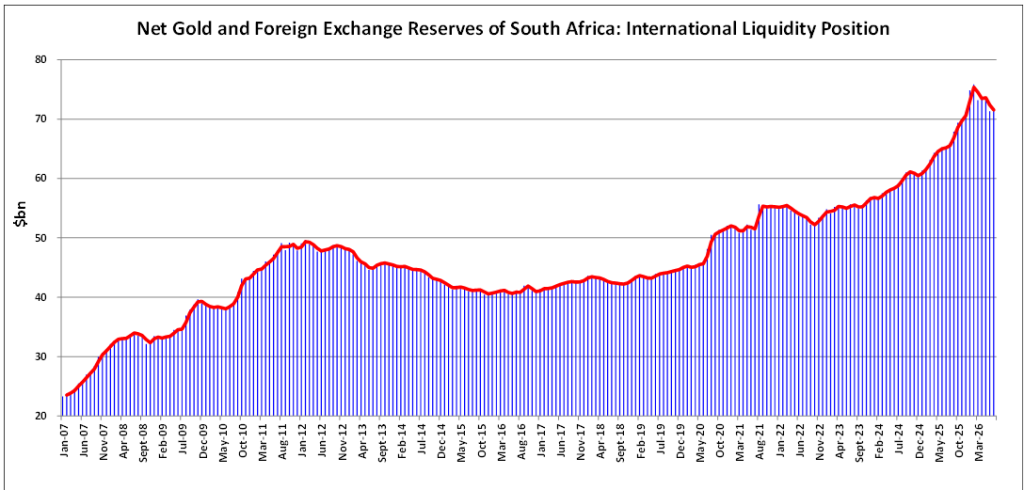
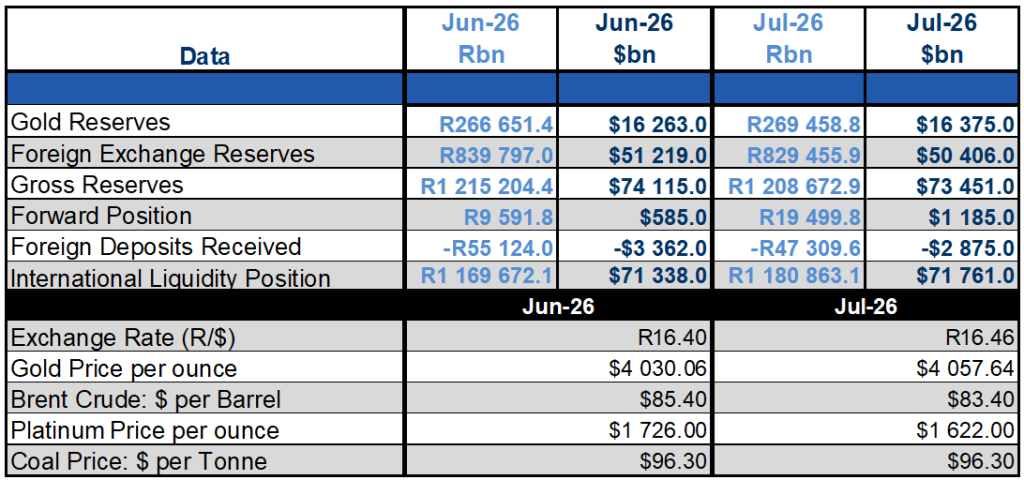
The South African International Liquidity Position, measured by Net Gold and Foreign Exchange Reserves, showed a marginal increase in both USD terms and in Rand terms for July 2026. The Rand depreciated slightly against the US Dollar from June to July 2026 following the ongoing conflict in the Middle East, according to official reports from the South African Reserve Bank. Reserves increased by nearly USD 423 million, following a USD 2.1 billion decline recorded in June 2026. The gold price remains high, having increased slightly in July from $4030/oz recorded in June to $4057/oz, and is still 23% higher than the prior year’s price. The sustained high gold price played a significant role in supporting reserves from January through July amid the ongoing conflict in the Middle East.
In USD terms, foreign reserves decreased in July 2026 compared to the previous month. The Reserve Bank continued to sell off some US Dollars in open market operations, partly due to higher prices for imported fuel resulting from the ongoing conflict in the Middle East, thereby impacting South Africa’s net international liquidity position at that time.
Key commodities such as gold, oil, platinum, and coal offer valuable insights into South Africa’s mining sector and inflation outlook. Monitoring these trends is vital for assessing inflation prospects, especially amid ongoing international developments and potential trade restrictions with the US following August’s tariff measures.
Tracking these movements is crucial, as inflation expectations will influence the South African Reserve Bank’s (SARB) interest rate decisions during the third quarter of 2026, especially considering the ongoing conflict in the Middle East and the tensions around the Strait of Hormuz. A stable Rand, albeit slightly stronger for now, and higher oil prices than at the beginning of 2026 are conducive to higher inflation. However, continued global geopolitical tensions and possible changes to trade agreements, such as the African Growth and Opportunity Act (AGOA), which has been extended by one year by the US administration, could introduce increased market volatility, as the 30% reciprocal tariffs were reduced to 12.5% for now as the US Supreme Court ruled that the 30% tariffs were unconstitutional and had to be removed. With recent US tariffs and the Federal Reserve’s decision to hold interest rates steady at its 29th of July 2026 announcement, the Rand may continue to experience short-term fluctuations, even as it appreciated against the US Dollar, which could affect South Africa’s economic outlook for the remainder of the year.


