
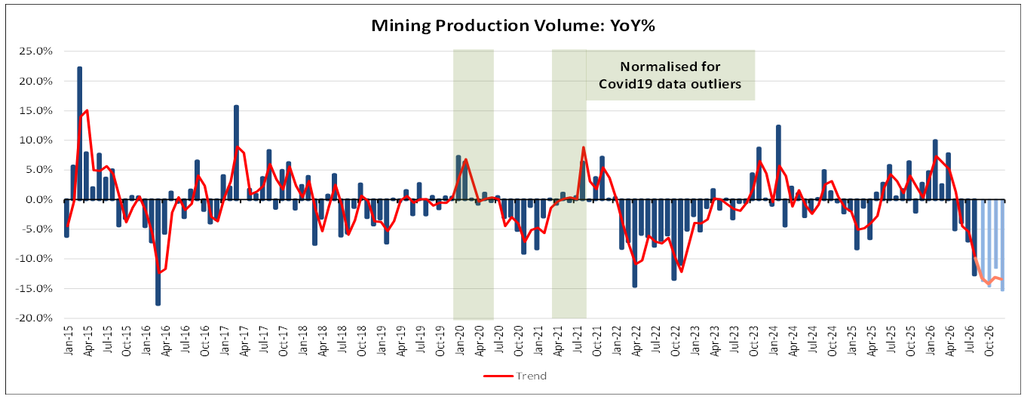
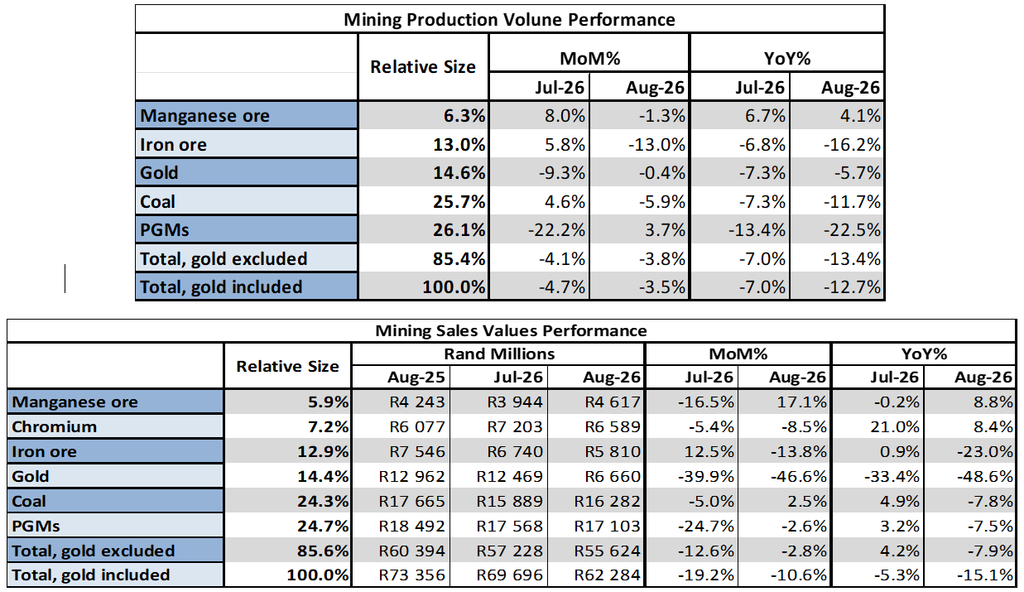
In August 2026, South Africa’s mining activity contracted by 12.7%, following a revised decline of 7.0% in July. The latest decrease was mainly driven by:
- Iron ore production, which fell by 16.2% and lowered overall mining output by 2.4 percentage points.
- Coal production, which declined by 11.7%, subtracting 3.0 percentage points from mining production growth.
- PGM production, which contracted by 22.5% and reduced total mining output growth by a further 6.1 percentage points.
For the rolling quarter ending in August 2026, seasonally adjusted mining output was 5.2% lower than in the rolling quarter ending in May 2026. This decline was mainly due to:
- A 5.7% decrease in iron ore production, which reduced total mining production by 0.8 percentage points.
- A 14.4% contraction in PGM mining, which subtracted 4.1 percentage points over the quarter.
- A 23.0% decline in diamond mining, which reduced mining output by a further 0.4 percentage points.
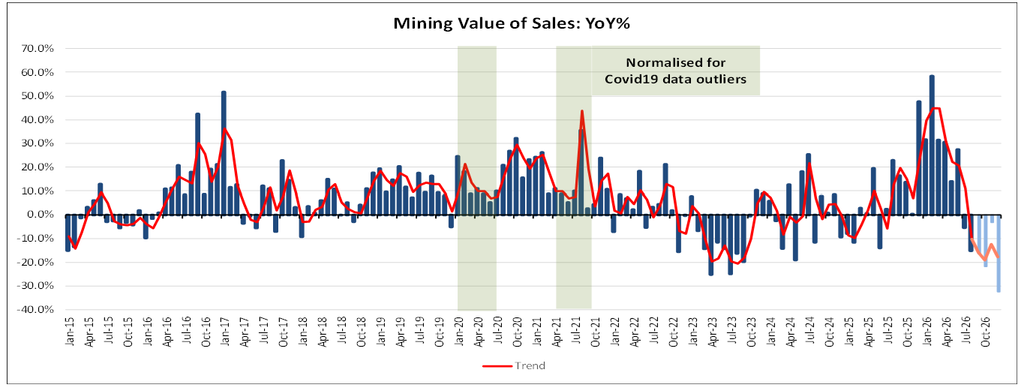
In August, nominal mining sales fell by 15.1%. The main contributors to this decline were:
- Iron ore sales, down 23.0%, reducing overall mining sales growth by 2.4 percentage points.
- Gold sales, down 48.6%, lowering total mining sales by 8.6 percentage points.
- PGM sales, down 7.5%, subtracting a further 1.9 percentage points from overall mining sales growth for July 2026.
- Coal sales, down 7.8%, reducing total mining sales by 1.9 percentage points.
The mining sector: still vital, but under pressure
Mining remains a cornerstone of South Africa’s economy. It earns valuable foreign exchange and employs about 450 000 people. However, this is around 26 000 fewer jobs than in the previous quarter, according to Stats SA’s labour statistics for the second quarter of 2026.
The latest GDP figures tell a similar story. In the second quarter of 2026, mining output fell by 0,7% year on year and by 3,0% quarter on quarter. This decline was not unexpected, given the job losses reported in the Quarterly Labour Force Survey, which showed that nearly 30 000 employment opportunities were lost during the period.
Rising costs and policy uncertainty
The ongoing conflict in the Middle East has driven up international oil prices, with the impact now being felt across South Africa’s mining sector through higher energy and fuel costs. These rising expenses, alongside policy uncertainty, concerns about property rights and the latest BEE requirements under the Employment Equity Regulations, 2025, are making conditions difficult for mining companies.
Together, these pressures are discouraging mining houses from investing in existing operations, funding exploration or developing new mines in South Africa.
Some relief from gold prices
There is some relief on the horizon. Geopolitical tensions have prompted investors to turn to safe-haven assets such as gold, keeping prices relatively high for now. This is helping to offset some of the sector’s rising costs.
Mining’s contribution to the economy remains significant—not only through direct and indirect employment, but also through its role in earning foreign reserves.
Trade challenges persist
Several challenges remain, including:
- Concerns about exports to the United States following new tariff measures introduced on 7 August.
- Proposed export tariffs on manganese.
- Import tariffs on South African steel entering the Eurozone.
- The loss of AGOA benefits in September.
- Continued uncertainty surrounding the new Mining Charter.
Geopolitical tensions and the conflict in the Middle East continue to disrupt global markets and constrain trade, as reflected in data released since the conflict began.
A silver lining
There is some positive news. Certain mining materials essential to steelmaking remain temporarily exempt from the higher US tariffs. This exemption offers welcome relief to a sector that continues to play a vital role in South Africa’s economy by providing jobs, earning foreign exchange and supporting economic growth.


