

Manufacturing Production
October 2025
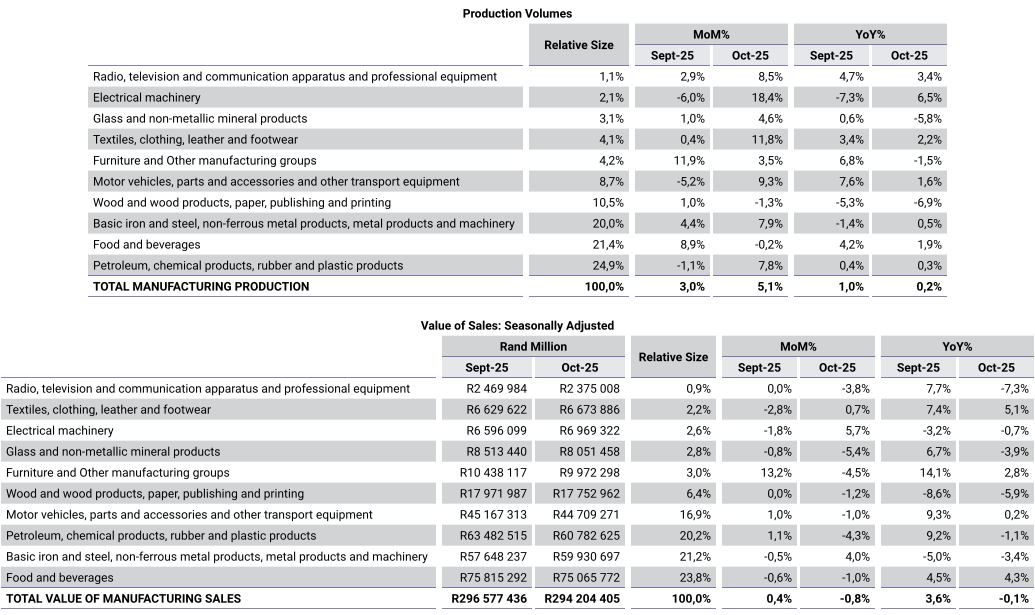
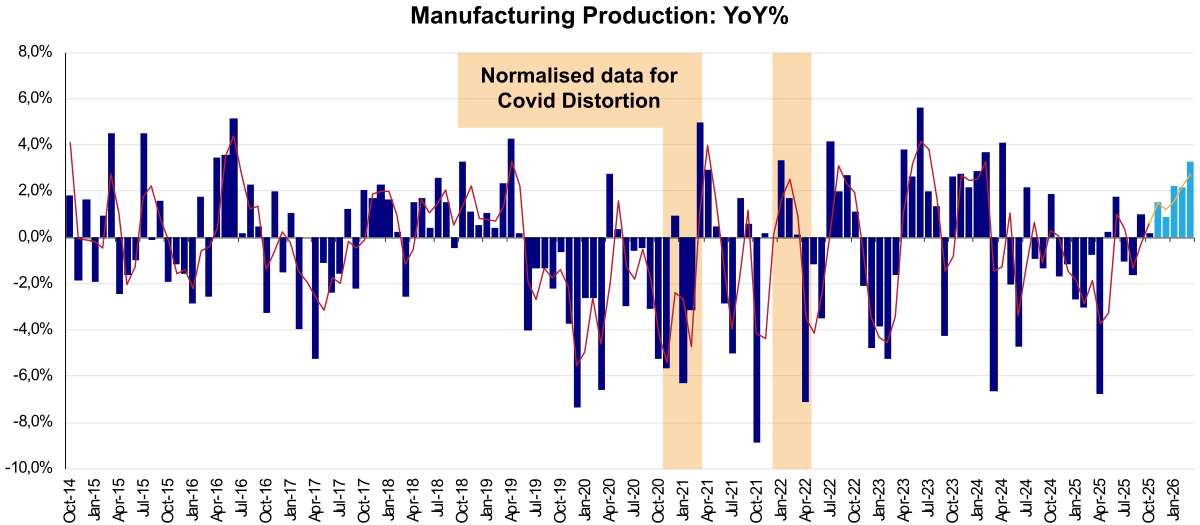
The food and beverages sector, along with electrical machinery, emerged as the primary contributors to this growth. Food and beverage production rose by 1.9%, adding 0.5 percentage points to overall performance, while electrical machinery grew by 6.5%, contributing an additional 0.2 percentage points. These sectors played a significant role in the manufacturing sector’s performance for October 2025.
However, two sectors negatively impacted manufacturing growth for the month:
- The wood and wood products, paper, publishing, and printing division which declined by 6.9%, subtracting 0.7 percentage points.
- The glass and non-metallic mineral products division decreased by 5.8%, deducting another 0.2 percentage points.
When seasonally adjusted, manufacturing production recorded a 0.4% increase in the three months ending October 2025 compared to the previous three months ending July 2025. Among the ten industries surveyed, six reported growth, with notable contributions from:
- Petroleum, chemical products, rubber, and plastic products, which expanded by 2.1%, contributing 0.4 percentage points.
- Furniture and related divisions, which grew by 9.9%, adding 0.4 percentage points.
Conversely, the wood and wood products sector contracted by 5.8%, detracting 0.6 percentage points from quarterly growth.
Seasonally adjusted manufacturing sales rose by 1.0% for the three months ending October 2025 compared to the previous three months, driven by significant growth in:
- Furniture and other divisions, which increased by 8.2%, contributing 0.3 percentage points.
- Basic iron and steel, non-ferrous metal products, metal products, and machinery, which grew by 5.3%, adding 1.0 percentage points.
Manufacturing is a key component of South Africa’s economy, employing approximately 1.6 million people and contributing 12.5% to GDP in 2024. However, employment decreased from 1.672 million in Q2 2025 to 1.610 million in Q3 2025. Nevertheless, GDP figures for Q3 indicated a 0.3% increase in manufacturing output. The current monthly data supports this slight increase of 0.3% in manufacturing output for Q3, in line with the GDP numbers released earlier this week.
Looking ahead, challenges are expected from Q3 onwards, partly due to US trade tariffs impacting output, sales, and employment. Tensions have recently escalated, with President Trump criticising South Africa and its position in the G20.
Despite positive developments in various sectors during October, business owners remain cautious due to concerns over US tariffs on exports and ongoing US-China trade tensions. This cautious sentiment is evident as businesses hold R1.8 trillion in cash reserves in commercial banks, ready to reinvest in South Africa if conducive economic policies and conditions are established to enhance business confidence and unlock the country’s growth potential in the medium to long term.


