Copyright © Aluma Capital (Pty) Ltd. All rights reserved.
Aluma Capital (Pty) Ltd is a registered Financial Services Provider (FSP 46449) in terms of The Financial Advisory and Intermediary Services Act (37 of 2002)
October 15, 2025

Mining Production and Sales

August 2025
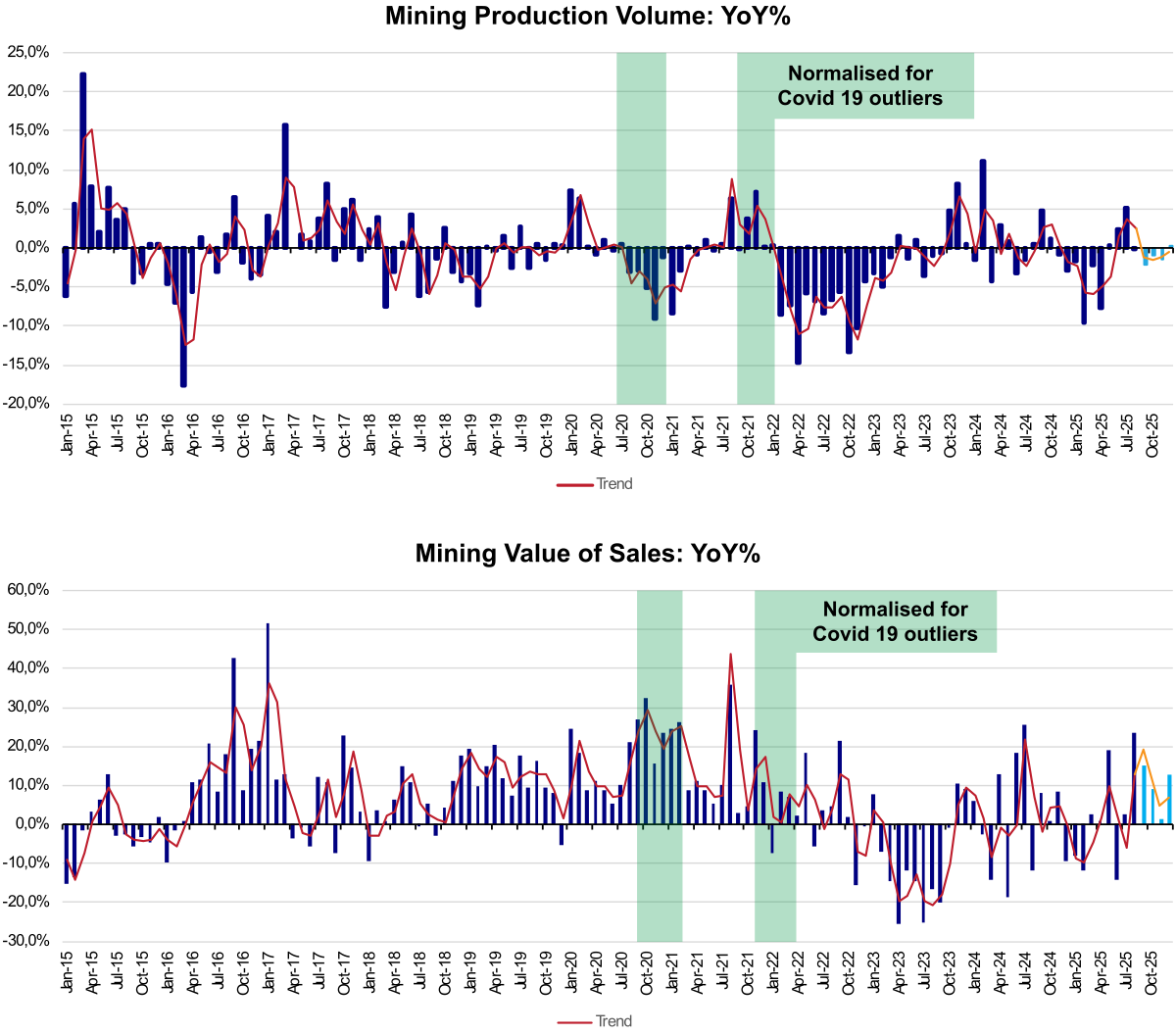
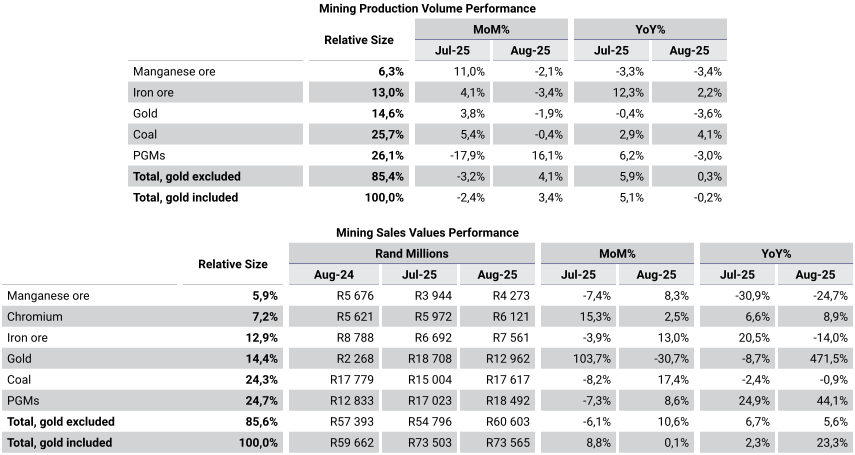
In August 2025, mining activity in South Africa declined by 0.2% year-on-year, following a 5.1% increase in July.

This decrease was mainly driven by:

  • A 3.0% drop in platinum production, which contributed -0.9 percentage points to the overall contraction for the month.
  • A 3.6% decline in gold production, subtracting another 0.4 percentage points.
  • A 3.4% contraction in manganese mining, accounting for an additional 0.3 percentage points.

For the rolling quarter ending August 2025, seasonally adjusted mining production increased by 3.3% compared to the previous three months. The quarterly growth was primarily driven by:

  • Platinum mining, which expanded by 9.1%, contributing 2.6 percentage points.
  • Coal production, which grew by 3.6%, adding another 0.8 percentage points.

Nominal mining sales increased by 23.3% in August. This positive trend was supported by several subsectors, notably:

  • Platinum sales, which surged by 44.1%, contributing 9.5 percentage points to total mining sales growth.
  • Gold sales, which increased significantly by 471.5%, adding 17.9 percentage points.

However, some segments negatively impacted mining sales:

  • Iron ore sales, which contracted by 14.0%, subtracting 2.1 percentage points.
  • Manganese ore, which declined by 24.7%, also reducing sales by 2.3 percentage points.

The mining sector remains essential to South Africa’s economy, providing foreign exchange earnings and employment for approximately 434,000 people, according to StatsSA labour statistics for the second quarter of 2025. The sector grew by 3.7% from the first to the second quarter of 2025, based on recent GDP data. This quarterly growth is encouraging, given the sector’s continued importance for employment and foreign exchange.

Employment within the sector has marginally increased compared to the previous quarter, highlighting its ongoing significance. Nevertheless, several challenges remain, including concerns over exports to the US following new tariff measures introduced on 7 August, proposed export tariffs on manganese, and import tariffs on steel exports to the Eurozone. The sector also faces difficulties related to the loss of AGOA benefits in September and ongoing issues surrounding the new Mining Charter.

On the international front, geopolitical tensions between the US and China—marked by trade conflicts and tariff disputes—continue to disrupt global markets and restrict trade flows. Nonetheless, some positive developments have occurred, such as the temporary exemption of certain mining materials used in steelmaking from high US tariffs. This offers some relief for the sector, which is crucial to South Africa’s economy in terms of employment, foreign exchange earnings, and overall growth.


More Coverage

Dive into “South Africa’s Crypto Crossroads: Modern Regulation or an Economic Time Machine?” an eye-opening exploration of South Africa’s latest Draft Capital Flow Management Regulations, 2026. As the South African government aims to modernise cross-border financial regulations and tighten digital currency controls, these proposed changes have sparked uproar among fintech leaders and legal experts. The draft threatens to overreach into constitutional rights, potentially stifling innovation and economic growth. With concerns over encroachments on privacy and powers to seize assets, critics argue that the regulations could deter investment and spark a talent exodus. As the public comment period extends, the country’s financial future hangs in the balance, poised between innovation and economic regression. Discover why industry stakeholders are on high alert and advocating for a careful recalibration of this legislative move.
In April 2026, South Africa’s manufacturing sector experienced a worrying 2.9% contraction, in stark contrast to earlier growth forecasts. While the Purchasing Managers’ Index (PMI) indicated slight optimism, with a rise to 52.6, the underlying data revealed significant declines in key industries, notably basic iron and steel and motor vehicles, which contributed heavily to the downturn. This article delves into the factors driving this decline, including the impact of US trade tariffs and ongoing diplomatic tensions, which have exacerbated the situation and led to a steep drop in exports. Despite these challenges, manufacturers have taken a cautious yet strategic approach, maintaining robust cash reserves amidst the turmoil. Explore the full report to understand the implications for South Africa’s economic landscape and the future of manufacturing in the region.
Discover the dynamics of South Africa’s retail landscape as April 2026 saw an unexpected 1.3% sales surge, surpassing analyst expectations and hinting at a delicate yet promising recovery in consumer demand. Unpack the complex backdrop of inflation concerns, interest rate adjustments by the South African Reserve Bank, and the broader economic challenges shaped by international tensions and rising costs. Despite the growth, households navigate a landscape of cautious spending, with recent interest rate hikes casting a shadow over future consumer spending and business confidence. This intriguing exploration offers insights into the driving forces behind the retail revival and the headwinds that may test its resilience.
In the latest analysis on South Africa’s economic landscape, our article delves into the implications of the recent 4.5% year-on-year rise in the Consumer Price Index (CPI), highlighting critical factors behind this uptick, including significant increases in housing, transport, and financial services. As inflation continues to surpass the Reserve Bank’s target, the report examines the resulting strain on household purchasing power and the rising reliance on short-term credit amid fluctuating global conditions. The article further explores the complexities of recent monetary policy decisions, including the Reserve Bank’s cautious approach to interest rates in response to these economic pressures exacerbated by international conflicts and tariff impacts. With insights into future inflation expectations and their potential effects on South Africa’s economic stability, this comprehensive report offers valuable perspectives on navigating the challenges ahead. Don’t miss out on the full details that could shape your understanding of the current economic climate!
In April 2026, South Africa’s mining sector saw a significant resurgence, with an impressive 8.2% growth in activity driven by a remarkable 36.5% increase in platinum group metals (PGM) production. The industry’s vitality is evident in the rolling quarter growth of 2.4%, bolstered by surging platinum and gold outputs. With mining sales soaring by 30.3%, supported by a dramatic upswing in platinum and gold sales, the sector remains a cornerstone of South Africa’s economy, providing crucial employment and foreign exchange. Despite this historic success, challenges loom, such as geopolitical tensions, new tariffs, and the loss of key international trade benefits, threatening future stability. Discover how South Africa’s mining industry is navigating these turbulent times, seizing opportunities, and overcoming the obstacles posed by international and domestic pressures in this compelling report.