Copyright © Aluma Capital (Pty) Ltd. All rights reserved.
Aluma Capital (Pty) Ltd is a registered Financial Services Provider (FSP 46449) in terms of The Financial Advisory and Intermediary Services Act (37 of 2002)
August 4, 2025

International Trade and Trade Balance

June 2025
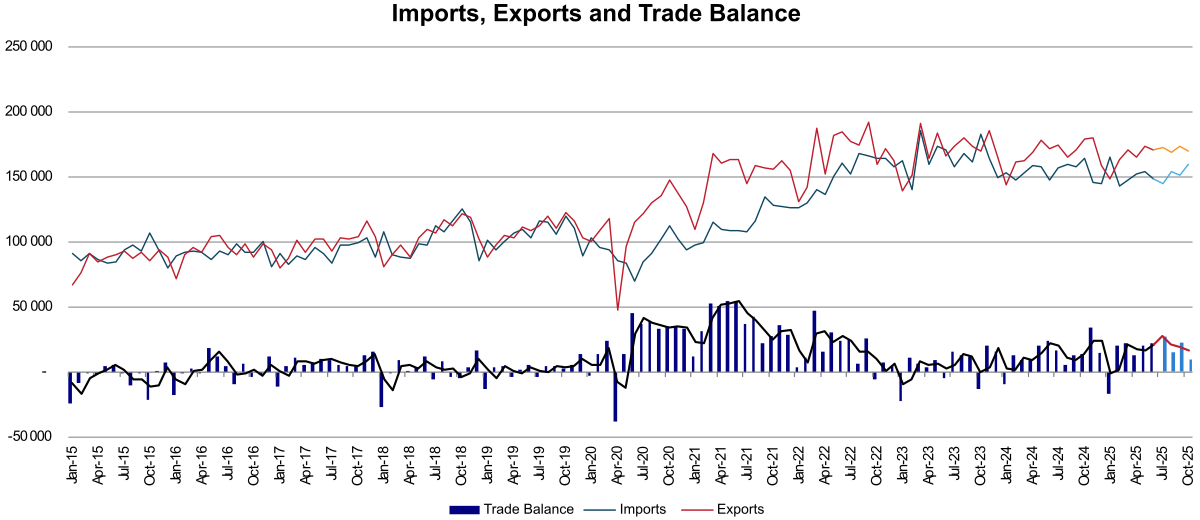
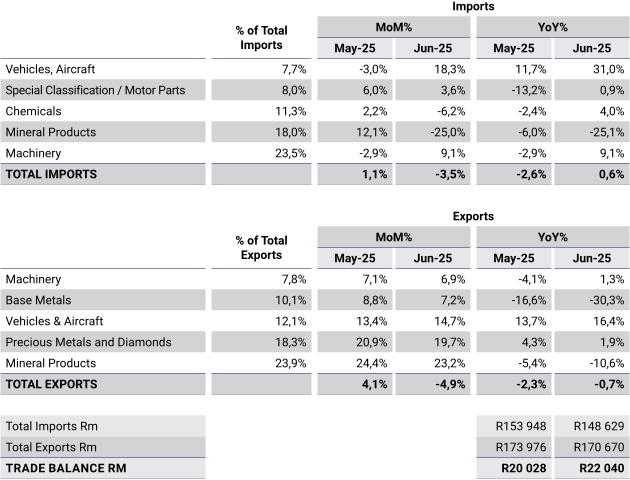
International trade measures South Africa’s demand for foreign goods and services relative to its demand for domestically produced products in global markets. The country primarily exports raw materials, including base metals, gold, precious metals, and minerals, while importing value-added products such as vehicles, chemicals, and machinery.

In June 2025, South Africa recorded a trade surplus of R22 billion, indicating that exports once again exceeded imports for the month. In the first six months of 2025, total exports grew modestly by 0.6%, from R986.2 billion in 2024 to R992.2 billion. Meanwhile, imports declined slightly by 0.9%, from R919.5 billion to R911.3 billion, reflecting a slowdown in demand and increased caution among domestic consumers regarding imported goods.

Looking ahead, demand may see slight growth in 2025, supported by a further 25-basis-point interest rate cut announced at the end of July. Lower interest rates, along with low inflation, a relatively stable and appreciated Rand against the US dollar, and reduced consumer and producer inflation, could help boost domestic demand in the coming months.


More Coverage

A sudden global shift has delivered much-needed relief for South Africa. Following a Middle East ceasefire, oil prices have dropped sharply and the Rand has strengthened—easing pressure on fuel costs and inflation. While earlier price spikes still weigh on the outlook, this combined correction offers a critical window for economic stability, improved consumer confidence, and renewed growth momentum.
South Africa finds itself balancing global energy shocks with decisive local action. As rising oil prices threaten to strain consumers and key industries, government intervention has softened the immediate impact—highlighting both the urgency of the moment and the need for smarter, more resilient fiscal tools to manage future volatility.
The South African Reserve Bank has opted for a “hawkish hold,” maintaining the repo rate at 6.75% despite headline inflation hitting a milestone low of 3.0%. Governor Lesetja Kganyago emphasised that while the inflation target has been met, the MPC remains wary of a potential “energy tax” on the economy, driven by global oil prices surging above $100 per barrel. Consequently, the Bank has adopted a cautious, forward-looking stance, slightly lowering the 2026 GDP growth forecast to 1.1% to account for these external shocks and ensure long-term currency stability.
South Africa faces renewed inflation risks despite brief market relief, driven by rising fuel costs and import dependence. The SARB is likely to hold interest rates to protect price stability.
This morning, South Africans received what should have been a crowning achievement for the South African Reserve Bank (SARB). Data from Stats SA revealed that the Consumer Price Index (CPI) cooled to 3.0% in February, down from 3.5% in January. This lands the country perfectly on the SARB’s new, more ambitious inflation target.